

The world’s most expensive car is not the one that broke a record at auction. It is the one someone commissioned. This ranking counts twenty cars by what they cost to build or commission, not by what they later brought at auction or sold for. The difference between those two numbers is where most published lists encounter challenges.
In this report:
- How These Twenty Were Priced
- The Production Flagships
- The Limited Series and the Most Expensive Bugatti Tier
- 16. Koenigsegg CCXR Trevita and the Diamond Weave Problem
- 15. Lamborghini Veneno Roadster: Nine Built, $5.3 Million Each
- 14. Pagani Huayra Imola: $5.4 Million, Five Built, Deliberately Unfinished
- 13. Bugatti Divo: Five Million Euros for 356 Kilos of Downforce
- 12. Pagani Huayra Codalunga Commission Cost: Seven Million Euros
- 11. Maybach Exelero: The $8 Million Figure That Was Never a Price
- 10. Bugatti Centodieci: Eight Million Euros to Resurrect the EB110
- The One-Offs
- 9. Bugatti Brouillard: The Number Nobody Has Confirmed
- 8. Bugatti F.K.P. Hommage: In Excess of Ten Million Euros
- 7. Bugatti La Voiture Noire: Why Four Different Numbers Circulate
- 6. Rolls-Royce Sweptail: The Car That Restarted Coachbuild
- 5. Pagani Zonda HP Barchetta: Fifteen Million Euros for a Birthday Present
- The Coachbuild Tier and the Most Expensive Rolls-Royce Ever Built
- Why Some of the Most Expensive Cars Ever Sold Are Not on This List
- What the Top of the Market Signals
- Frequently Asked Questions
How These Twenty Were Priced
Every list of this kind mixes three incompatible numbers: what the OEM charged, what a car resold for, and inadvertently, what someone guessed. A resale flip is not a list price. A press estimate is not an OEM statement. Ranking them against each other produces an order that looks authoritative but measures nothing.
Our ranking uses one basis only and details the evidence behind every number:
- OEM (Manufacturer)-stated. The company published or confirmed the price. Bugatti does this. Most do not.
- Spokesperson magnitude. A company representative confirmed a range rather than a figure. Common at Rolls-Royce.
- Press estimate. Widely reported, never confirmed by the maker.
- Untraceable. Repeated everywhere, but unsourced.
Prices are ranked before tax wherever a tax basis is known, which is Bugatti’s own convention and the only way to compare a European commission against an American one. Where a figure is based on a press estimate, no tax treatment has ever been declared, and none is assumed here. Conversions use the rate contemporary to each car rather than a single reference date, because a build price belongs to the year it was set. Auction results are excluded entirely, which is why several famous nine-figure sales are absent.
The Production Flagships
This band starts at $3.6 million, roughly a tenth of what the most expensive car on this list cost, and the four cars here share something the rest do not: you could, in principle, have walked into a dealer and ordered one. Allocation permitting. All four are sold out.
20. Lamborghini Sián FKP 37: $3.6 Million for a Supercapacitor Experiment
Lamborghini stated roughly $3.6 million for the Sián at launch in 2019 and built sixty-three coupes, matching the year Ferruccio Lamborghini founded the company. It was the first Lamborghini hybrid, briefly the most expensive car the company had sold, and it stored energy in a supercapacitor rather than a battery.
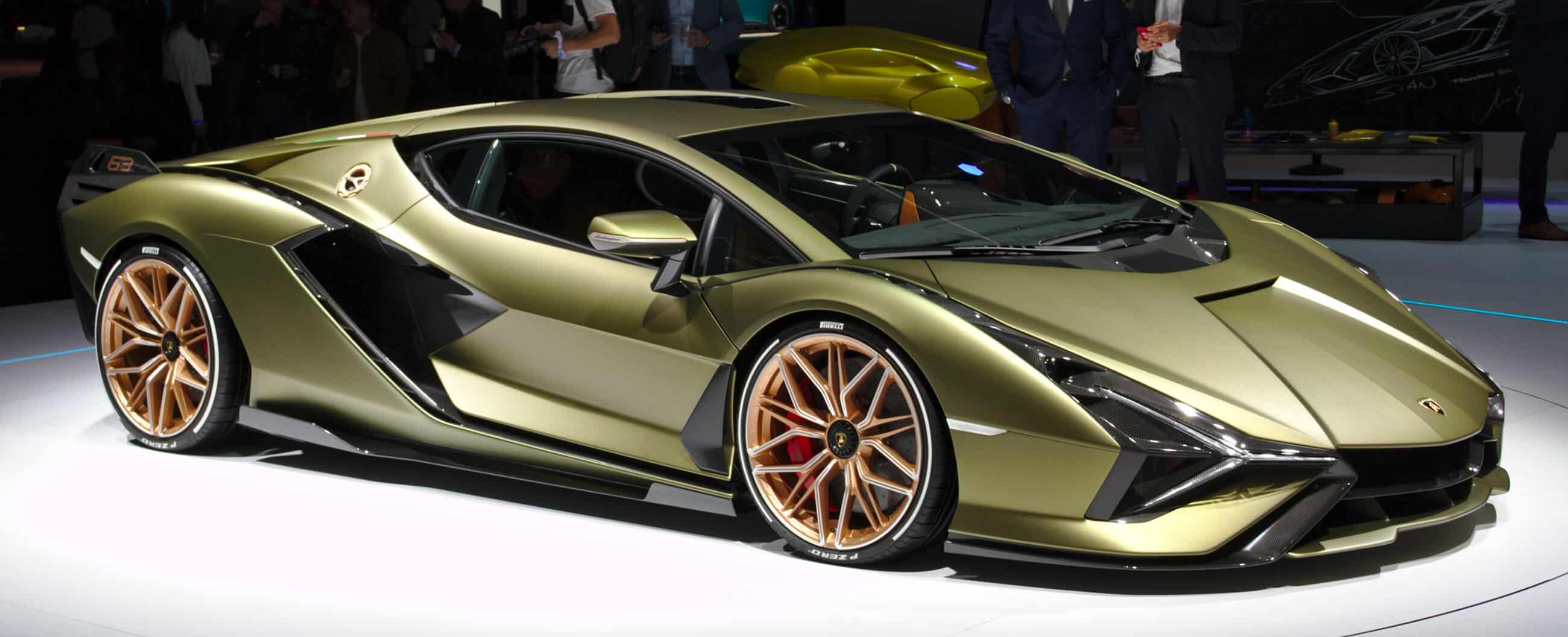
That choice was the point. A supercapacitor charges and discharges far faster than a lithium cell, which suited a naturally aspirated V12 needing torque fill rather than electric range. The 48-volt system added 34 horsepower for a combined 819, in a unit three times more powerful by weight than a comparable battery. Lamborghini has not repeated the architecture since, which makes the Sián a terminal generation of exactly one car.
The FKP 37 suffix honors Ferdinand Karl Piëch, born 1937, the Volkswagen Group chairman who kept both Lamborghini and Bugatti alive through the 2000s. His name appears again further up this list.
19. Ferrari F80 Price: 799 Cars, All Spoken For Before Anyone Saw One
Ferrari’s manufacturer-stated price for the F80 is 3.6 million euros, roughly $3.9 million, across 799 cars. Every one was allocated before the public reveal in October 2024. Deliveries began in December 2025 and run through 2027, which makes this the most expensive car Ferrari currently sells.
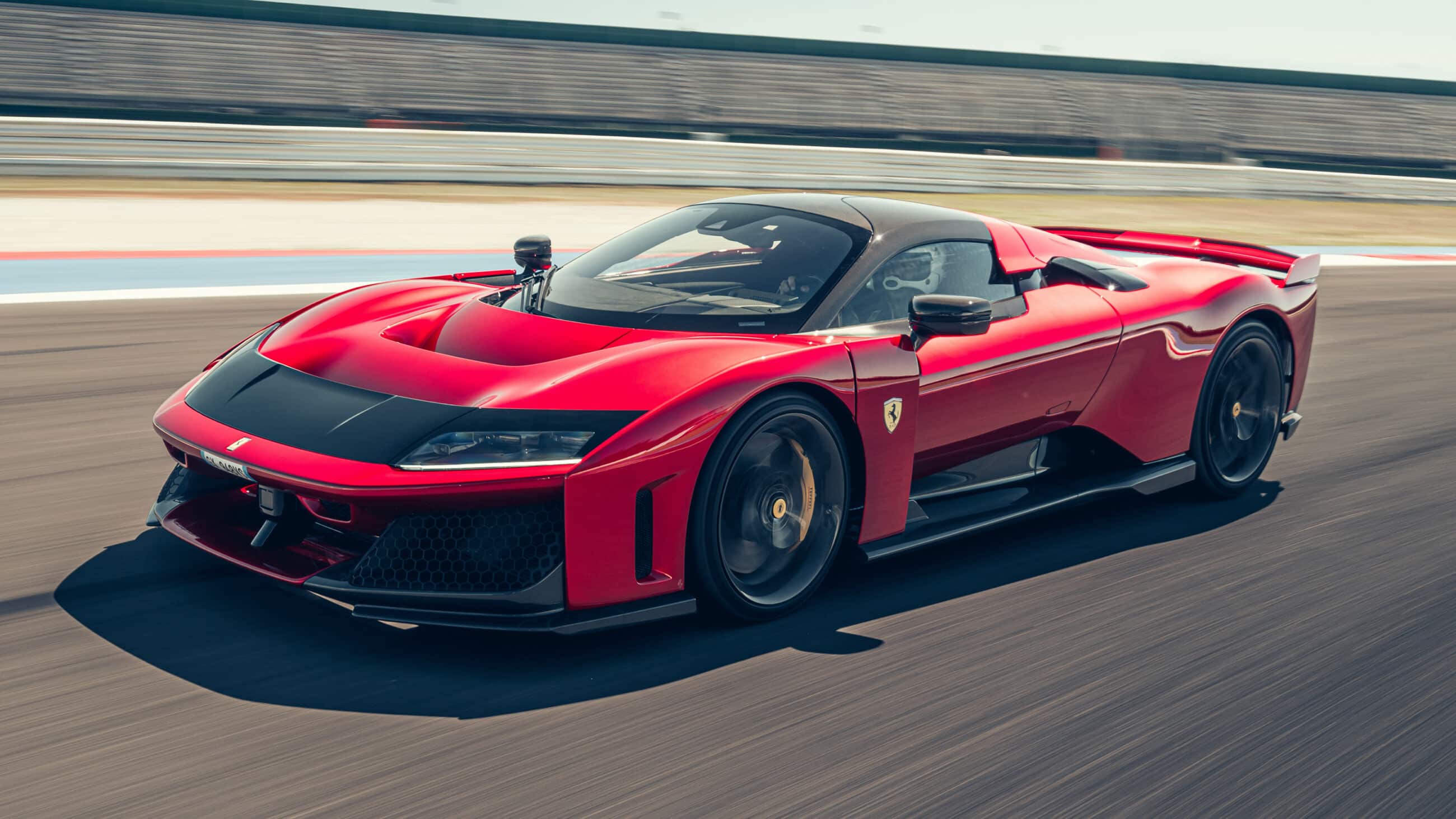
The powertrain is the part most lists omit. The F80 uses a 3.0 litre twin-turbo V6 derived from the 499P that won Le Mans, paired with a tri-motor hybrid system on an 800-volt architecture, for 1,200 horsepower. Ferrari’s previous flagship, the LaFerrari, used a V12. Dropping to six cylinders in a halo car was the more radical decision, and the one that will define how this car is remembered.
Tailor Made commissions push individual cars past $4.5 million. Those are options rather than a different list price, so the F80 is ranked at its factory figure.
18. Bugatti Tourbillon Price and the V16 That Replaced the W16
Bugatti states 3.8 million euros net of tax for the Tourbillon, about $4.1 million, with 250 planned and deliveries from 2026. It is the first Bugatti of the Rimac era, the most expensive car in the marque’s series range, and the first in two decades not to use the W16.
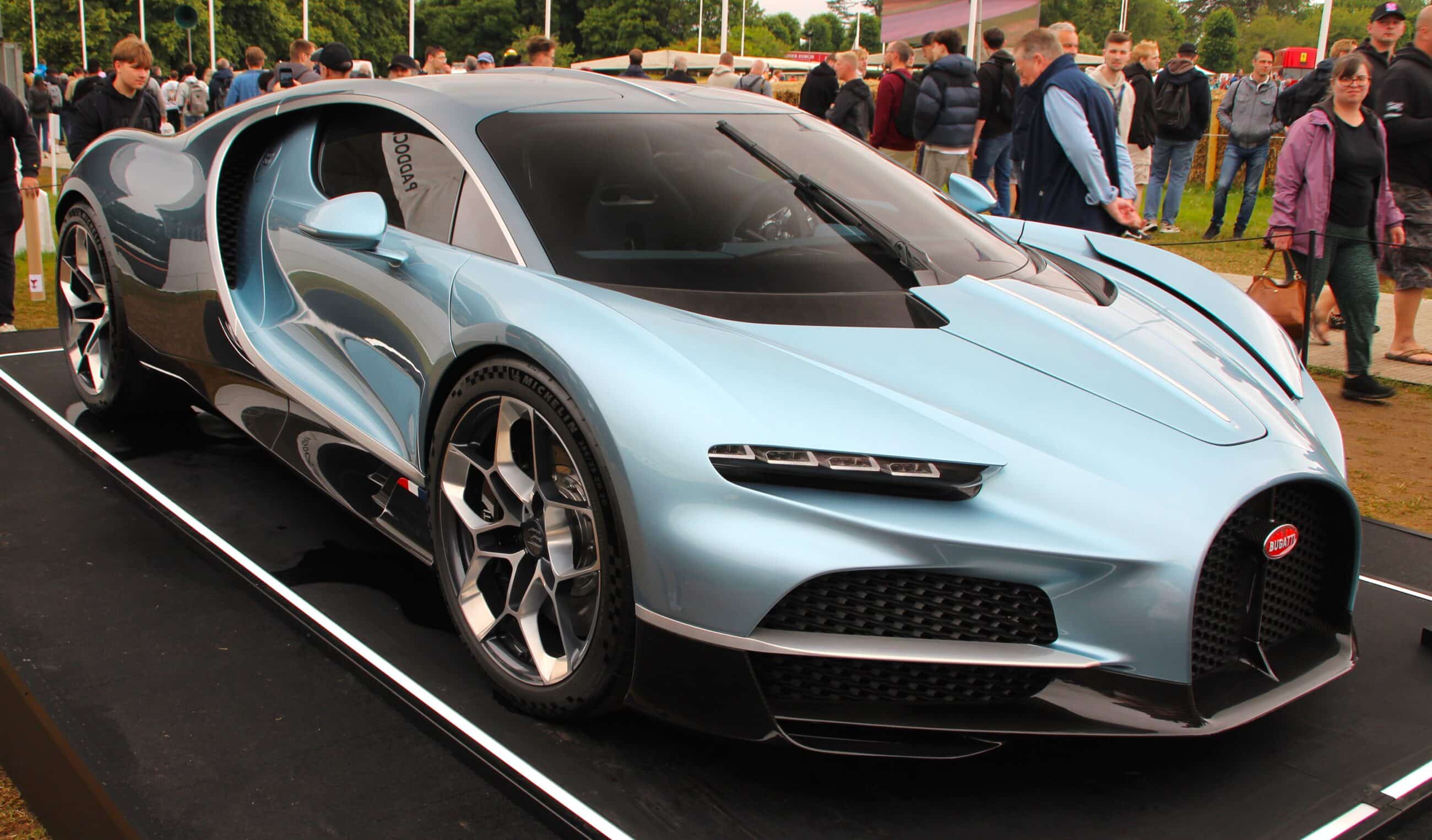
In its place sits a naturally aspirated 8.3 litre V16 built with Cosworth, paired with three electric motors for roughly 1,800 horsepower. Bugatti went naturally aspirated at the exact moment the rest of the industry went the other way.
The instrument cluster explains the name. Bugatti commissioned Swiss watchmakers to build it from titanium, sapphire and ruby as a skeletonized assembly, and it is fixed in place while the steering wheel rotates around it, so the gauges never disappear behind a spoke.
17. Bugatti Bolide: Four Million Euros Net for a Car You Cannot Register
Bugatti priced the Bolide at 4 million euros net, around $4.7 million, and confirmed a run of forty. The final example was delivered in 2025. It is track-only, which means the most expensive car in this band by a clear margin is also the one you cannot legally drive home.
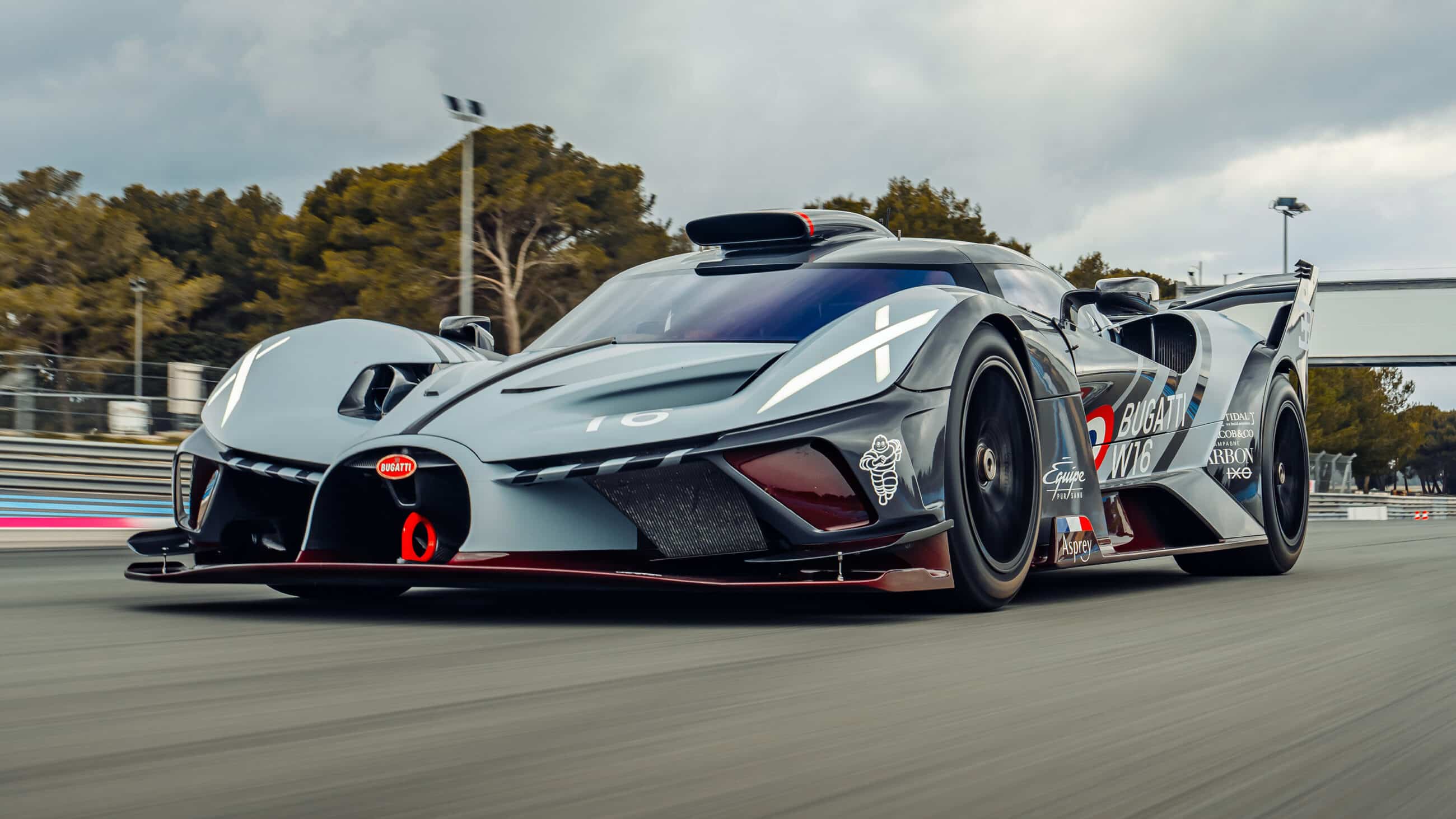
The W16 makes 1,600 PS here, in a car engineered to a dry weight far below any road Bugatti. The monocoque meets FIA LMH safety standards despite the car never being homologated for a race series. That is an unusual decision, and an expensive one, because meeting a standard you are not required to meet buys nothing except margin.
Bugatti built the Bolide as the last unrestrained expression of the W16 before the Tourbillon replaced it. Forty cars, one engine, no series to enter.
The Production Flagships: Build Price and Production Count
Four cars, four sold-out order books, and every one of them allocated rather than sold. Allocation is the currency in this tier, and what sits in the garage now determines what you are offered next.
The Limited Series and the Most Expensive Bugatti Tier
Seven cars occupy the band between $4.8 million and $9 million, still far below the most expensive car in this ranking. Production counts here run from two to forty, and the pricing basis gets less reliable as the numbers climb.
16. Koenigsegg CCXR Trevita Price and the Diamond Weave Problem
The CCXR Trevita is reported at $4.8 million in 2009, a press estimate Koenigsegg has never confirmed. Three were planned and two were built, because the process that gave the car its name proved close to unmanufacturable at any price.
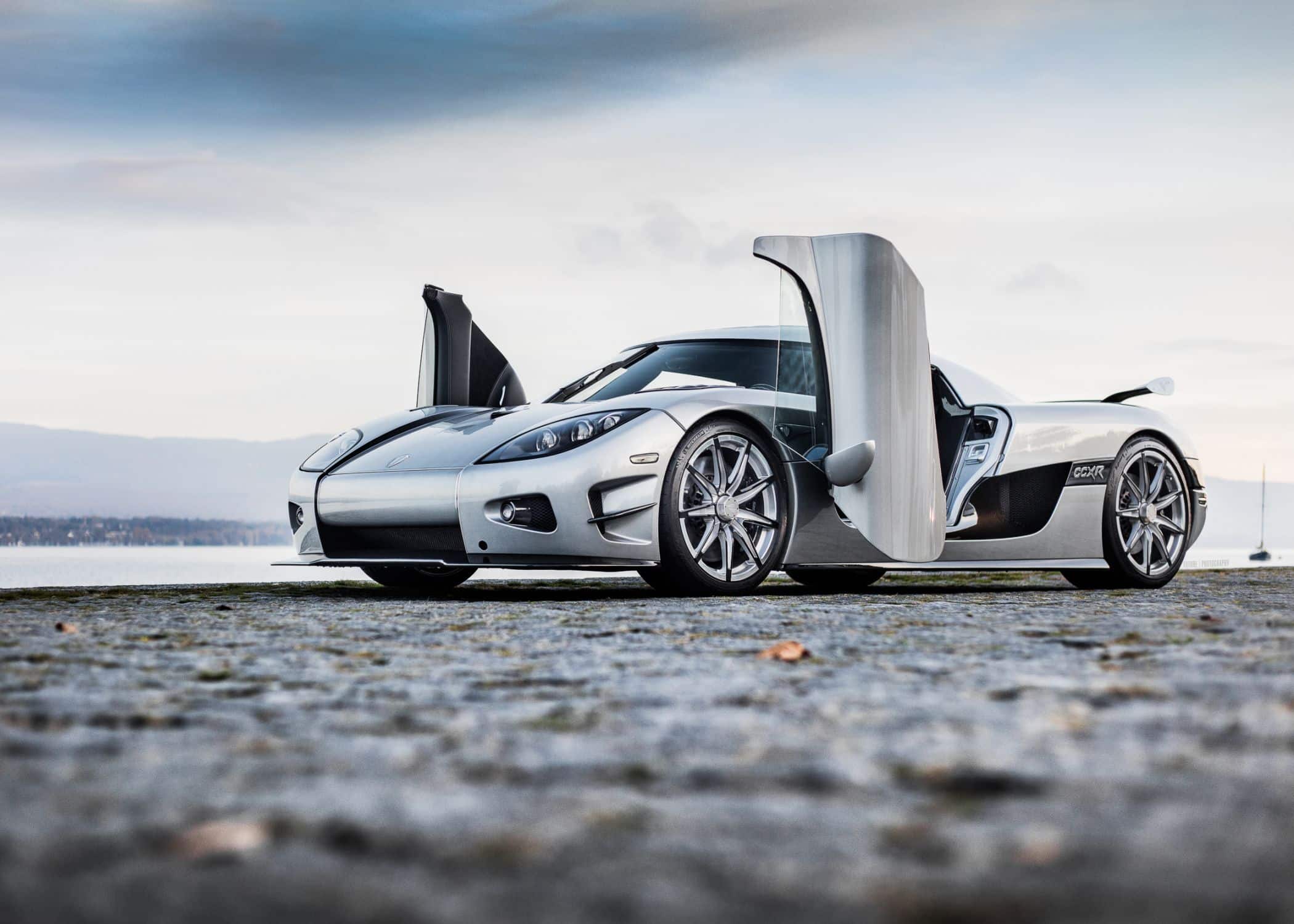
Trevita means three whites in Swedish. It refers to a diamond weave carbon fibre, a proprietary process coating individual fibres to produce a silvery white finish rather than the usual black. Koenigsegg developed it in house, then abandoned it after two cars. The difficulty was not the coating but achieving consistency across a full body at the tolerances a visible weave demands.
Resale figures several times the original list price attach to this car. Those are not build prices, which is precisely why it is ranked here instead.
15. Lamborghini Veneno Roadster: Nine Built, $5.3 Million Each
Lamborghini stated $5.3 million for the Veneno Roadster in 2014, against $3.9 million for the coupe, and built nine. The coupe run was three. Twelve cars across both bodies, from a company that builds thousands of Huracáns in a year.
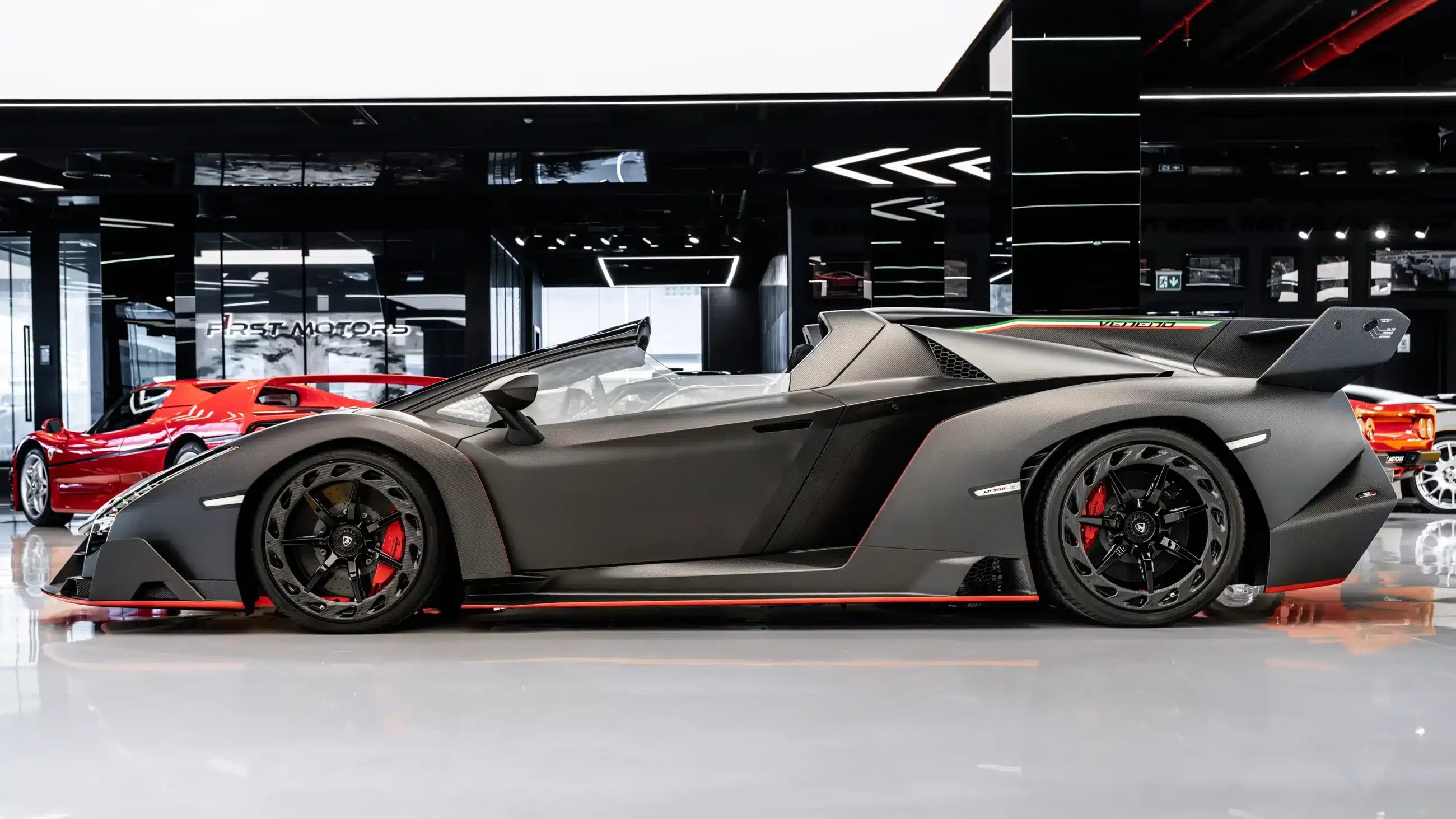
The Roadster has no roof. Not a folding roof, not a removable panel. Lamborghini deleted the structure entirely and reinforced the Y-shaped carbon monocoque to compensate, which is why the open car cost $1.4 million more than the closed one. The 6.5 litre V12 makes 740 horsepower in both.
The Veneno marked the company’s 50th anniversary and was the most expensive car Lamborghini had built to that point. It set the template every limited-series car in this band followed.
14. Pagani Huayra Imola: $5.4 Million, Five Built, Deliberately Unfinished
The Huayra Imola is reported near $5.4 million, a press estimate rather than a Pagani statement, and five were built. It is named for the circuit where Pagani developed it, and Horacio Pagani has said publicly that its appearance was dictated entirely by aerodynamic function rather than by drawing.
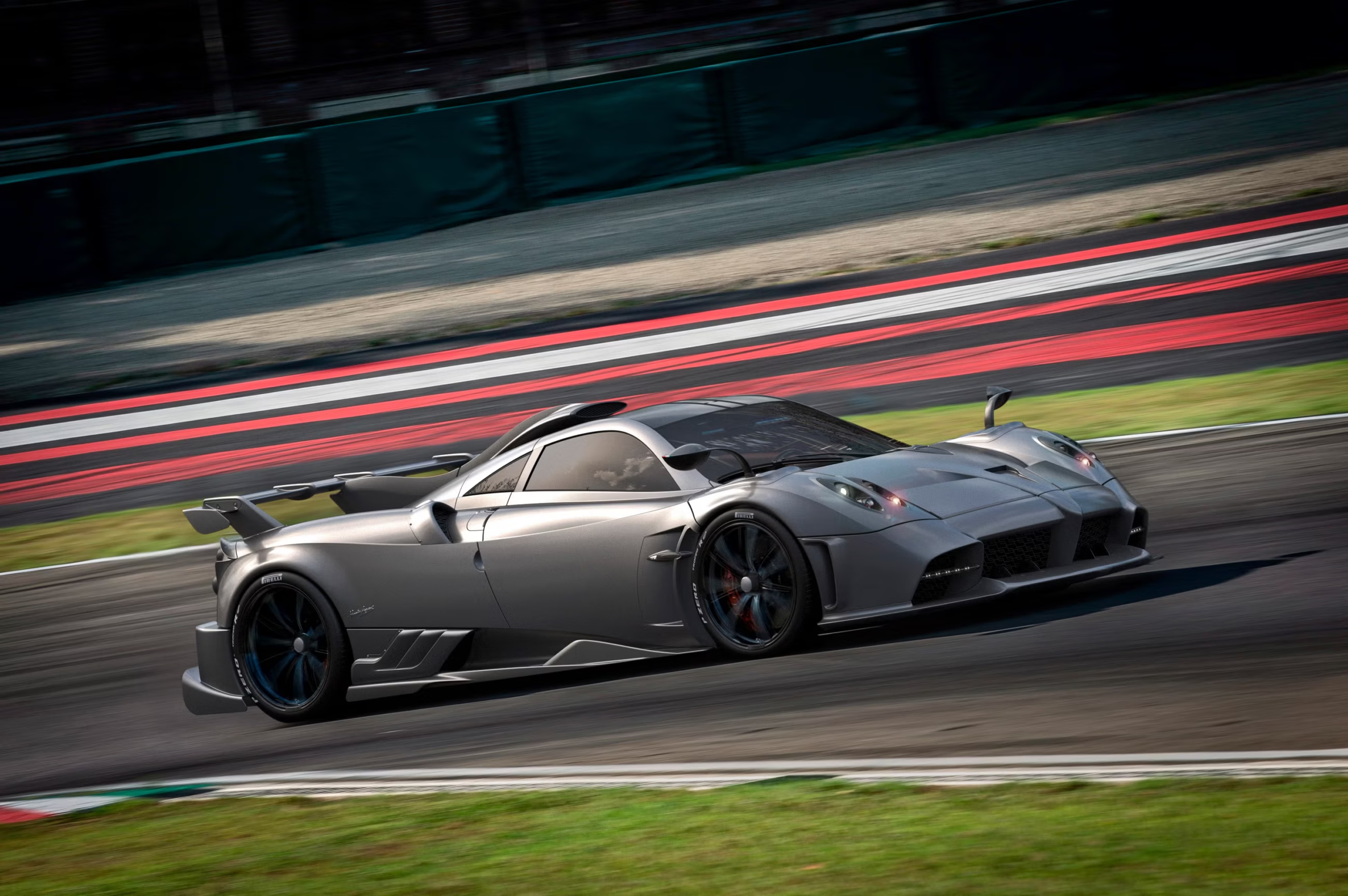
The chassis uses Carbo-Triax HP62 G3, a Pagani composite layering carbon and titanium fibres for stiffness at lower weight than conventional carbon. Four movable aerodynamic flaps work with the suspension to keep the car flat under load. The result looks unresolved next to a Huayra Roadster, and that is the intent.
Five cars, all sold before the reveal, all specified by owners who already had Paganis in the collection.
13. Bugatti Divo Price: Five Million Euros for 356 Kilos of Downforce
Bugatti states 5 million euros for the Divo, roughly $5.8 million at 2018 rates, and built forty of them in 2018. It sits on Chiron underpinnings but was engineered for lateral grip rather than outright top speed, a decision that reverses the entire Bugatti proposition.
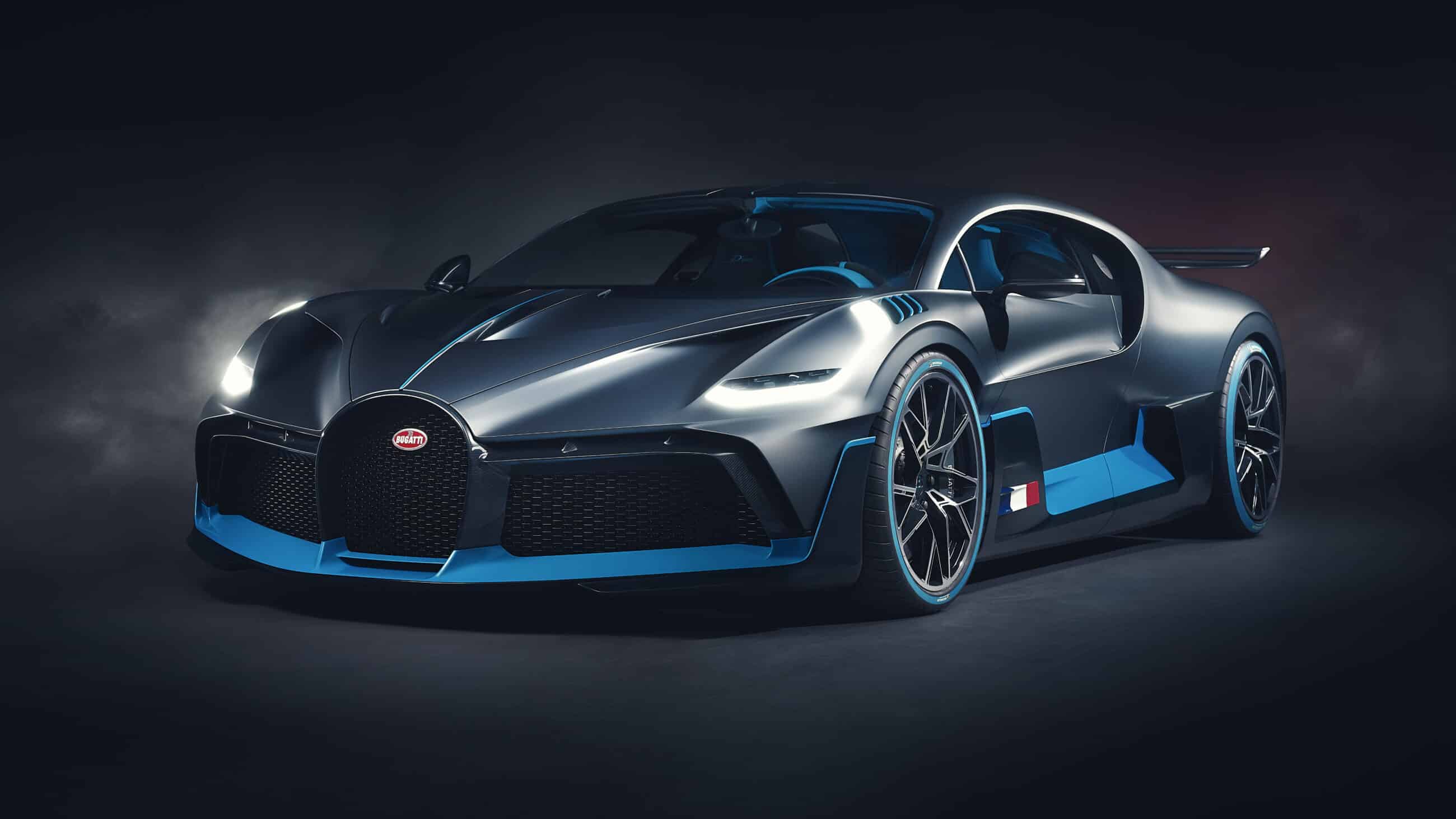
The numbers behind that reversal: 356 additional kilograms of downforce, 1.6g of lateral acceleration, and thirty-five kilograms less mass than a Chiron. Top speed was capped at 380 km/h, deliberately below the Chiron’s, because the aerodynamic work producing downforce also produces drag. Bugatti accepted a slower car in a straight line in exchange for eight seconds around Nardò.
All forty sold to existing Chiron owners before the car was shown publicly.
12. Pagani Huayra Codalunga Commission Cost: Seven Million Euros
Pagani confirmed 7 million euros for the Codalunga, about $7.6 million, and built five of them from 2022. The name means long tail, and the car extends 360 millimetres behind a standard Huayra without adding any of the weight that usually follows a longer body.
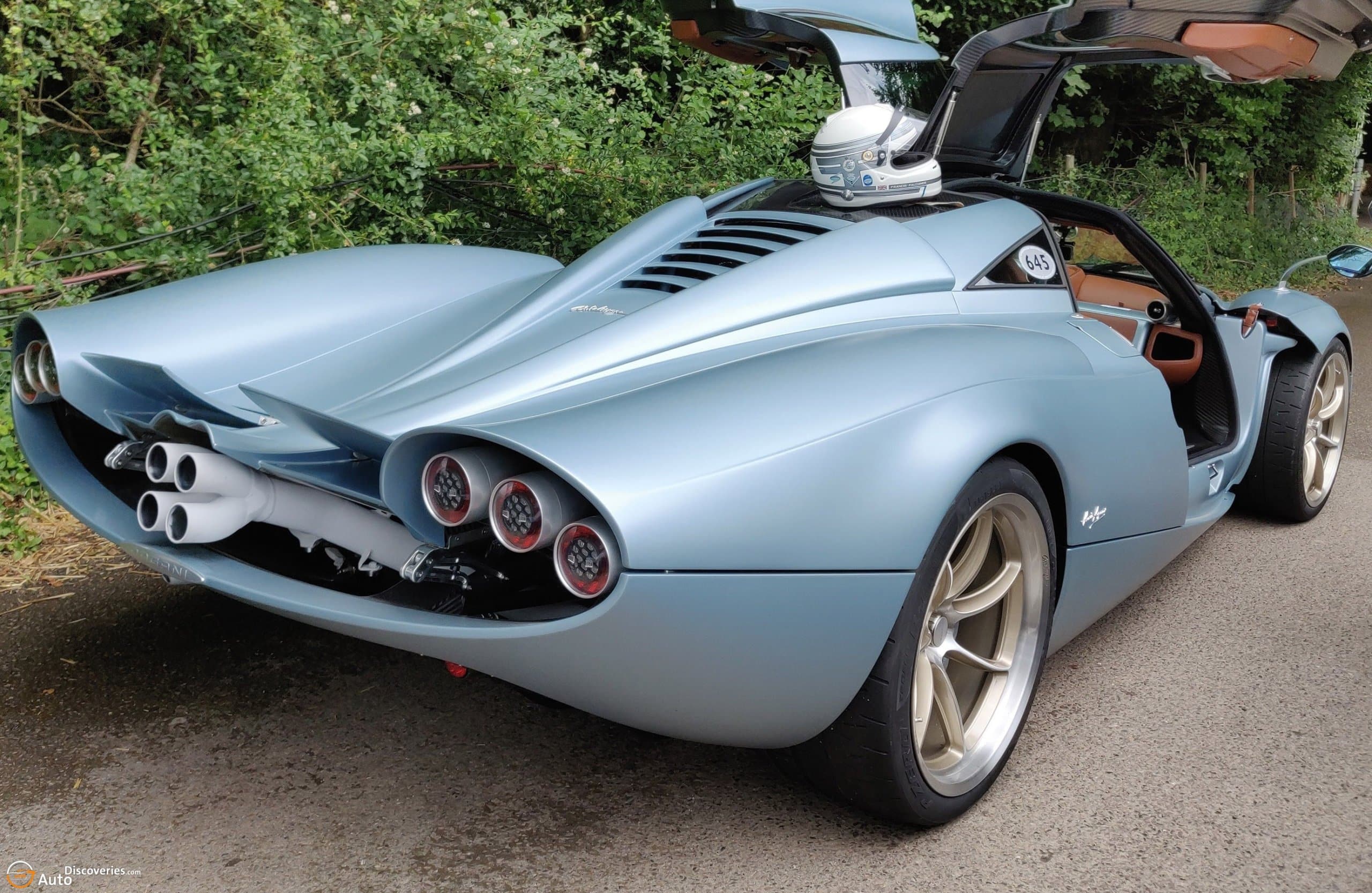
It is in fact seventy kilograms lighter. Pagani achieved that through Grandi Complicazioni, the in-house bespoke arm that takes commissions the series production line cannot. Development ran two years with the five clients involved throughout, and the AMG twin-turbo V12 makes roughly 829 horsepower.
The exhaust is white ceramic coated titanium. That is not styling. It is thermal management on a car whose lengthened bodywork traps more heat than the original design anticipated.
A note on the Exelero figure. The $8 million attached to the Maybach Exelero is not a price. It is an estimate of what the car cost to develop, and the two are not interchangeable. Treat any list ranking it alongside manufacturer list prices with caution.
11. Maybach Exelero: The $8 Million Figure That Was Never a Price
The Exelero is a one-off built across 2004 and 2005, and the roughly $8 million figure following it everywhere describes a development programme rather than a transaction. Nobody paid it, because the car was never for sale. It is the only entry here never offered to anyone.
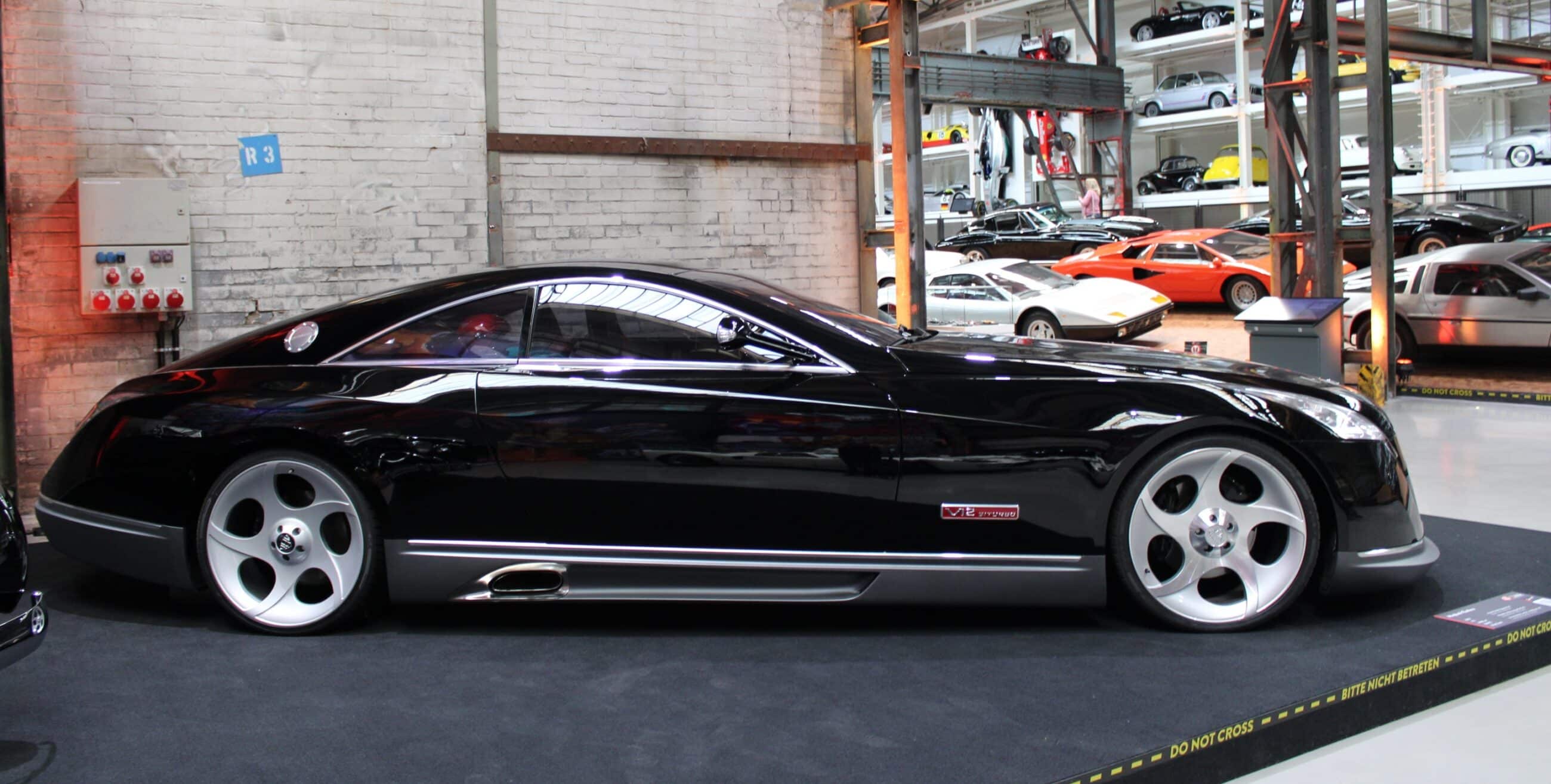
Fulda, the German tyre maker owned by Goodyear, commissioned it as a high-speed test bed for a new tyre line, targeting 351 km/h. The body was designed by students at Pforzheim and built by Stola in Turin. The twin-turbo V12 makes roughly 700 horsepower. Fulda funded it, Fulda owned it, and the car existed to validate rubber.
It later changed hands privately, and figures near $5 million and $8 million attach to those sales in various retellings. None is confirmed. Ranking it among the most expensive cars ever built is a judgment call rather than a fact, and excluding it would remove a car that appears on nearly every comparable list.
10. Bugatti Centodieci Price: Eight Million Euros to Resurrect the EB110
Bugatti stated 8 million euros for the Centodieci, around $9 million, and built ten. At the time it was the most expensive Bugatti the company had produced. The name means one hundred and ten in Italian, and the car is a tribute to the EB110 built under Romano Artioli in the early 1990s.
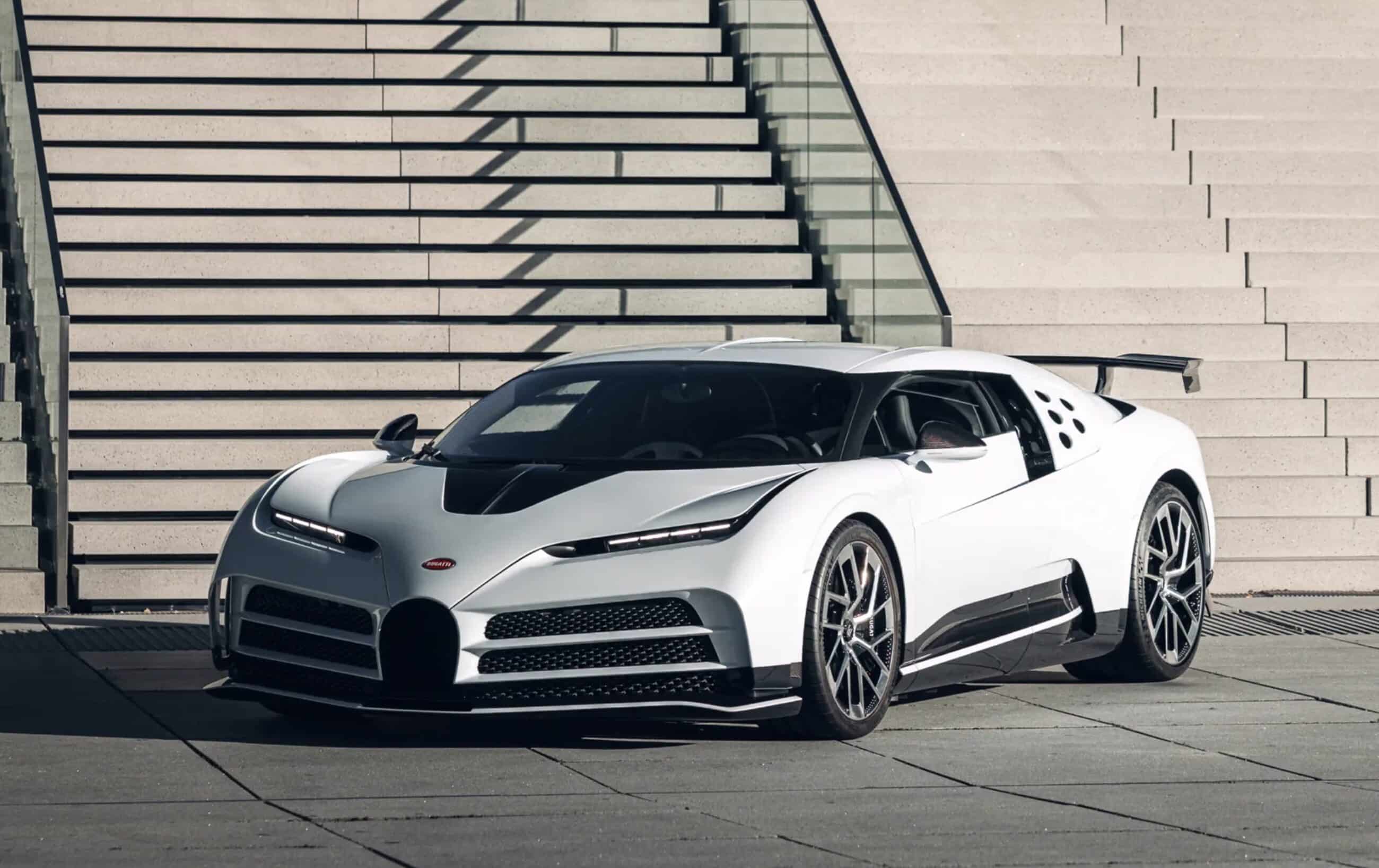
The W16 makes 1,600 PS, the highest output Bugatti had signed off at that point. The bodywork abandons the Chiron’s curves for the EB110’s hard planes, including five circular air intakes on each flank quoting the original directly. The engine bay is covered in glass, which created a thermal problem Bugatti solved with additional ducting rather than by abandoning the detail.
Ten cars, all allocated before the reveal at Pebble Beach in 2019.
Every car in this band sold out before its public reveal, to owners who already held something from the same marque. Allocation in this tier is a function of what is already in the garage. If the configuration premium at the retail tier governs what a normal exotic is worth, allocation history governs what happens at this level, and it is the part no valuation report captures.
The One-Offs
Five cars sit between roughly $12 million and $17.5 million, in the band where the world’s most expensive car of any given year usually lands, and this is the point at which series production stops entirely. Four of the five are single examples, and the fifth was built in threes.
9. Bugatti Brouillard Price: The Number Nobody Has Confirmed
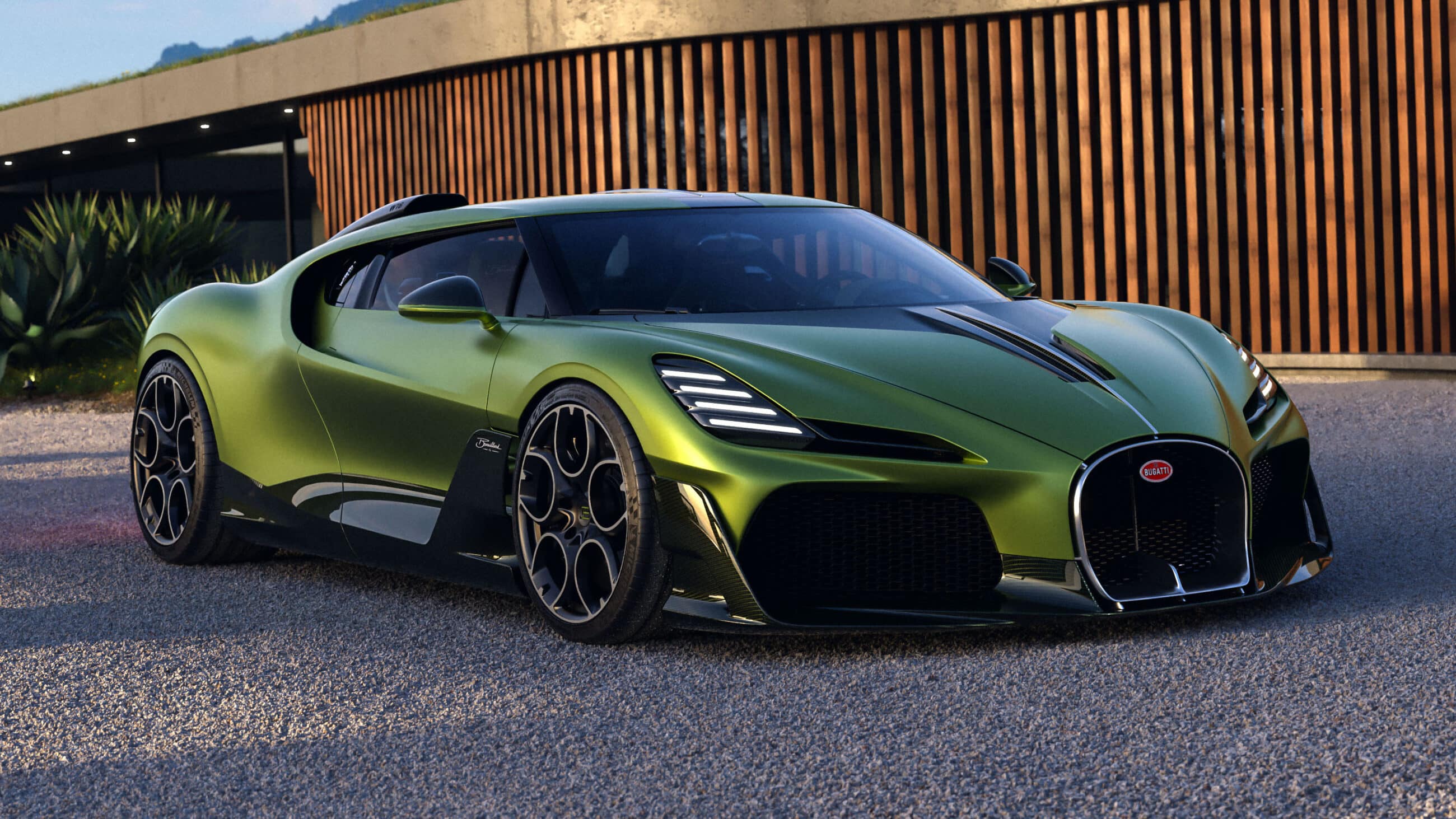
Bugatti has published no price for the Brouillard, the first car from Programme Solitaire, shown at The Quail during Monterey Car Week in 2025 with delivery scheduled for 2027. Press reports circulate a range from $10 million to $20 million. None cites an invoice, a factory source or an appraisal.
It is ranked against the only Programme Solitaire figure anyone has confirmed, the F.K.P. Hommage in the next entry at more than 10 million euros. Same programme, same architecture, one year apart. On the circulated $20 million it would sit at five, above everything else here, on the strength of a number no source has ever attributed.
Programme Solitaire matters more than the car in any case, because it is the mechanism that will produce the most expensive Bugatti of the next decade. Bugatti caps it at two cars a year, and unlike previous one-offs it permits changes to the vehicle’s geometry rather than to its finishes alone. Design chief Frank Heyl has said that when you build only one, the retail price has to recover the entire development cost of that car from the client who ordered it. That is structural logic rather than a figure: bespoke tooling, wind tunnel time, carbon modifications and single-use homologation, amortized across a production run of one.
The car is named after Ettore Bugatti’s favourite horse. The interior carries a commissioned Parisian tartan and embroidered horse motifs in olive green leather, and the W16 makes 1,578 horsepower with 1,180 pound-feet of torque. It sits on the same architecture as the Veyron that established the marque’s modern era, but the Brouillard is its own object rather than a tribute to it.
8. Bugatti F.K.P. Hommage: In Excess of Ten Million Euros
Bugatti revealed the F.K.P. Hommage on 22 January 2026, twenty years after the first production Veyron, and a company spokesperson confirmed the price exceeds 10 million euros, roughly $12 million. One car, already sold, and the only Programme Solitaire commission Bugatti has attached a figure to in any form.
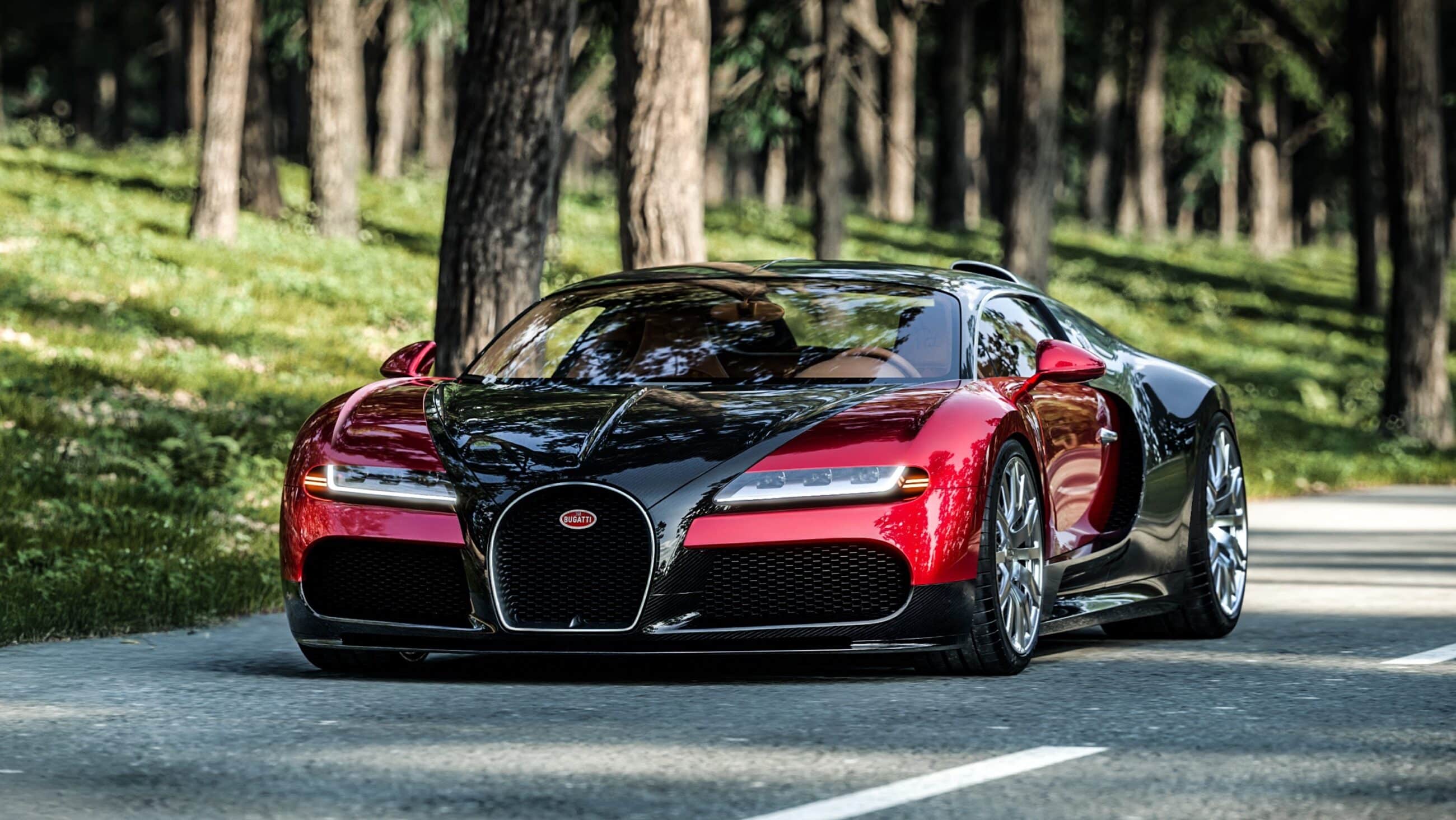
The initials belong to Ferdinand Karl Piëch, the same man the Lamborghini Sián honors at the bottom of this list. Piëch drove the Veyron programme through the Volkswagen Group against considerable internal resistance, and the Hommage is Bugatti’s own recreation of the car that resulted. It quotes Veyron chassis 001 directly, in a two-tone Rouge Jubilé scheme, with the W16 making 1,578 horsepower. For a fortnight in January it was described across the trade press as the most expensive car of the year.
A 43 millimetre Audemars Piguet Royal Oak Tourbillon is built into the fascia. Three cars in this ranking carry a removable timepiece in the dashboard, and this is the first of them to appear. The marriage of haute horlogerie and coachbuild is not decoration in this tier. It is how the money stays visible while the car is parked.
7. Bugatti La Voiture Noire Price: Why Four Different Numbers Circulate
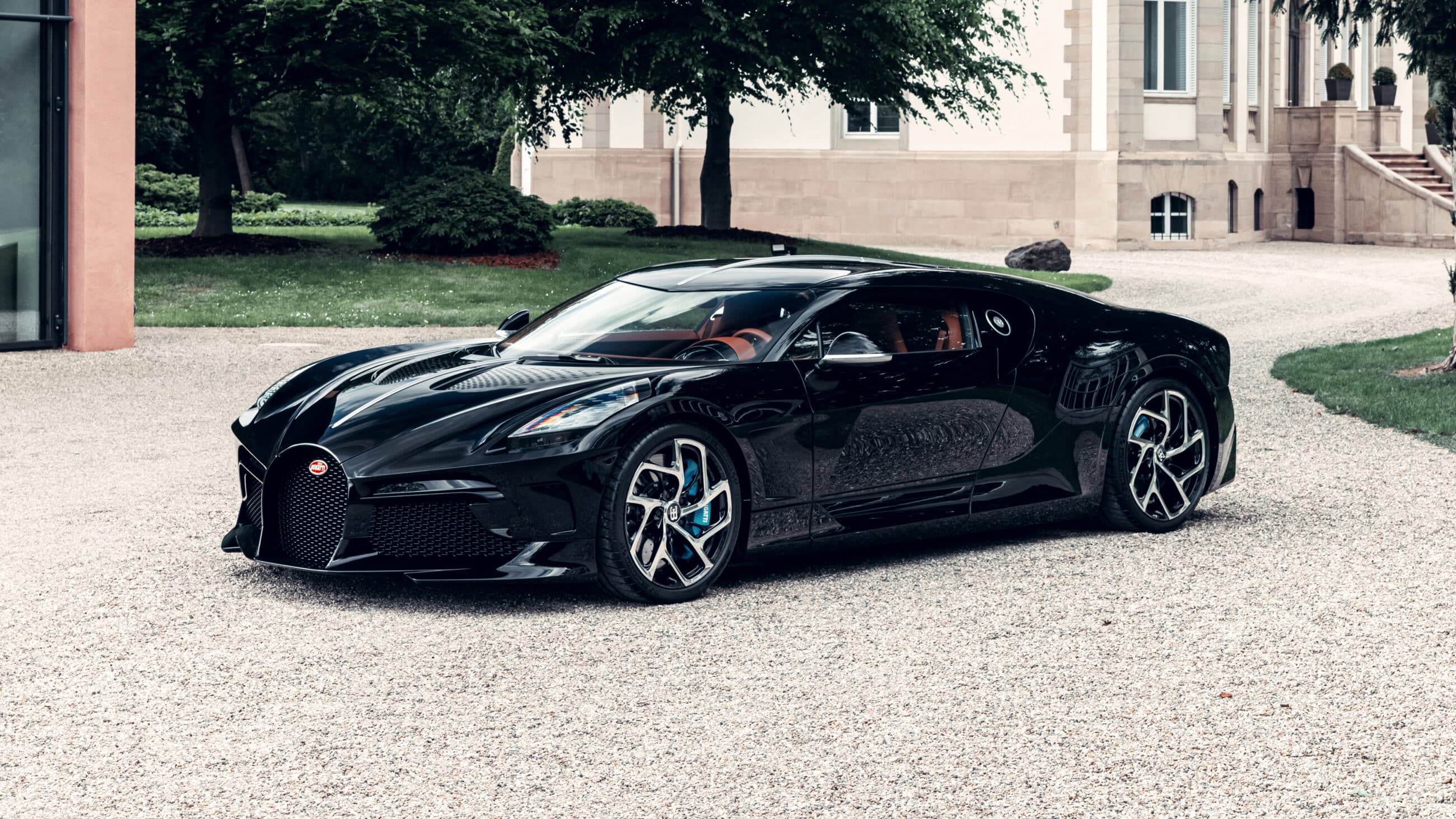
Bugatti announced La Voiture Noire at Geneva in March 2019 as the world’s most expensive car, at 11 million euros before tax and 16.7 million euros with tax. In dollars at the time, $12.5 million and $18.9 million. One car, one price, two tax treatments, and the source of more published confusion than any other figure here.
Here is what circulates and why:
La Voiture Noire: What Each Published Figure Actually Represents
| Published figure | What it actually is |
|---|---|
| $12.4M to $12.5M | The 11 million euro pre-tax price |
| $17.5M | A stale or mistaken conversion |
| $18.68M to $18.9M | The 16.7 million euro with-tax price |
| Various others | Exchange rate drift on the same two euro figures |
There is no disagreement between sources. There are two correct numbers and a widespread failure to say which one is being quoted.
This ranking uses the pre-tax figure, which is why La Voiture Noire sits at seven rather than at the fifth or sixth position most publishers give it. On a with-tax basis it would rank fifth, above the Zonda HP Barchetta. That single decision is the difference between a list that compares like with like and one that does not.
For six years it stood as the most expensive Bugatti ever built. The body runs 450 millimetres longer than a Chiron on a wheelbase stretched by 250. Six exhaust outlets sit in a single row. It is a homage to the Type 57 SC Atlantic, and specifically to the black car Jean Bugatti kept for himself, which vanished during the Second World War and has never been found. Delivery came around the end of 2021, more than two years after the reveal. The buyer has never been identified, and reports naming Ferdinand Piëch trace to unnamed industry sources rather than confirmation.
Bugatti stated both figures publicly at the Geneva reveal in March 2019: 11 million euros before tax, 16.7 million euros after.
Bugatti Automobiles, Geneva International Motor Show, March 2019
If you hold something Chiron-derived, La Voiture Noire is the reason that platform carries a halo the numbers alone do not explain. Specification drives the delta on the Chiron platform underneath it far more than mileage does.
6. Rolls-Royce Sweptail Price: The Car That Restarted Coachbuild
The Sweptail is estimated at approximately £10 million, around $12.8 to $13 million at 2017 exchange rates, and was delivered that year after four years of work. It held the title of most expensive Rolls-Royce in existence for six years, and every car in the band above it exists because this one worked.
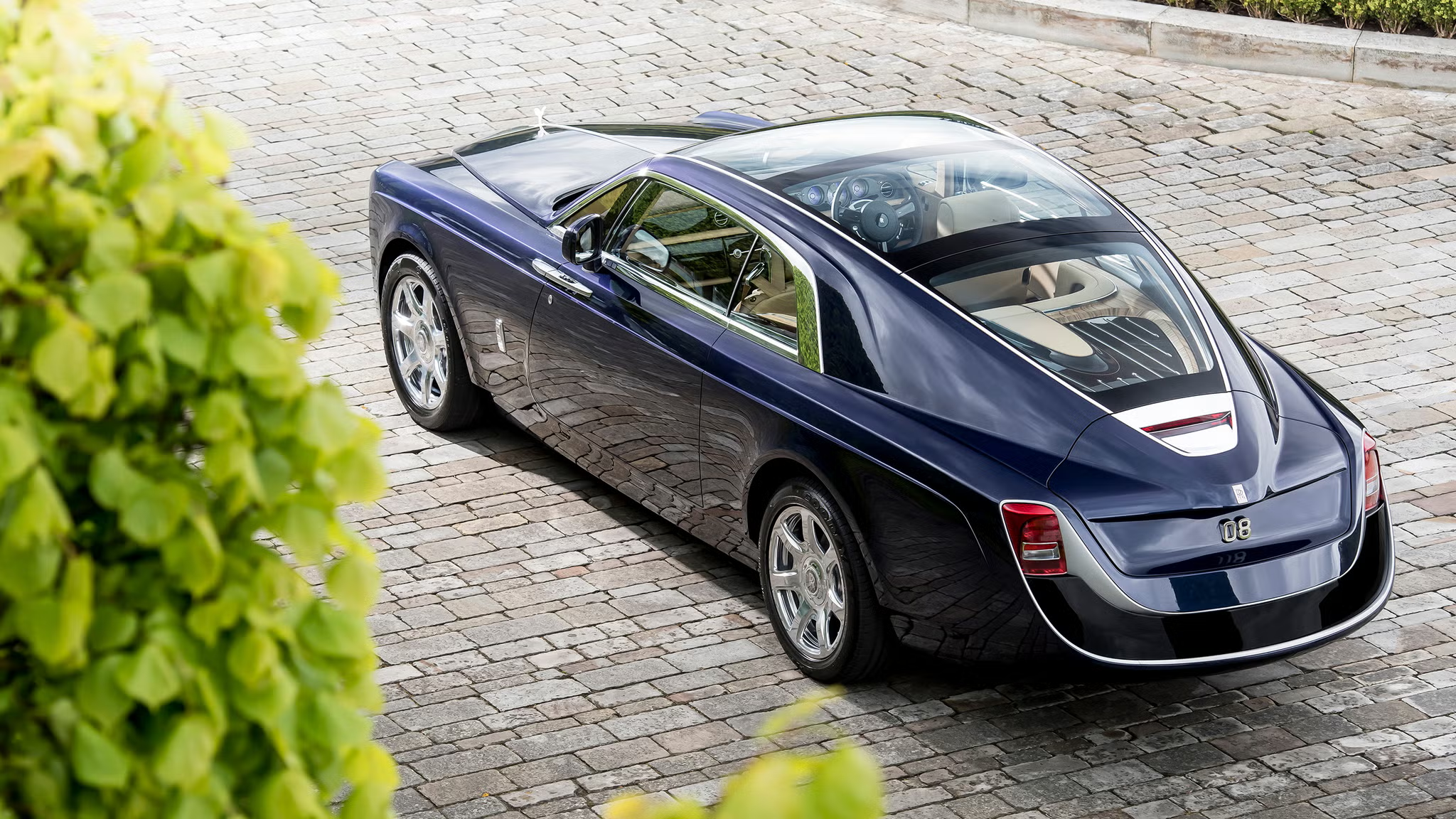
The client collected one-off yachts and aircraft, and approached Rolls-Royce in 2013 asking for a modern equivalent of the coachbuilt cars of the 1920s and 1930s. The tapering rear came from those, and from racing yacht hulls. The panoramic glass roof is among the largest ever fitted to a Rolls-Royce and is structural rather than an insert.
Rolls-Royce declined to confirm the figure when the car was shown, and has declined ever since.
Asked to confirm the price at the Sweptail’s reveal at Villa d’Este in 2017, Torsten Müller-Ötvös would say only that the car had been “substantially expensive.”
Rolls-Royce Motor Cars, Sweptail reveal, Villa d’Este, 2017
The same posture governs every car in the band above, eight years later.
There is no rear seat. The cabin is a strict two-seater with a bespoke case behind the occupants built to hold one specific laptop and one specific bottle. That degree of specificity is what separates a commission from an option list.
5. Pagani Zonda HP Barchetta: Fifteen Million Euros for a Birthday Present
Pagani confirmed 15 million euros for the Zonda HP Barchetta, roughly $17.5 million, and built three. Horacio Pagani kept one for himself. It was built to mark his 60th birthday, which makes the most expensive car Pagani has ever produced one the founder commissioned for his own collection.
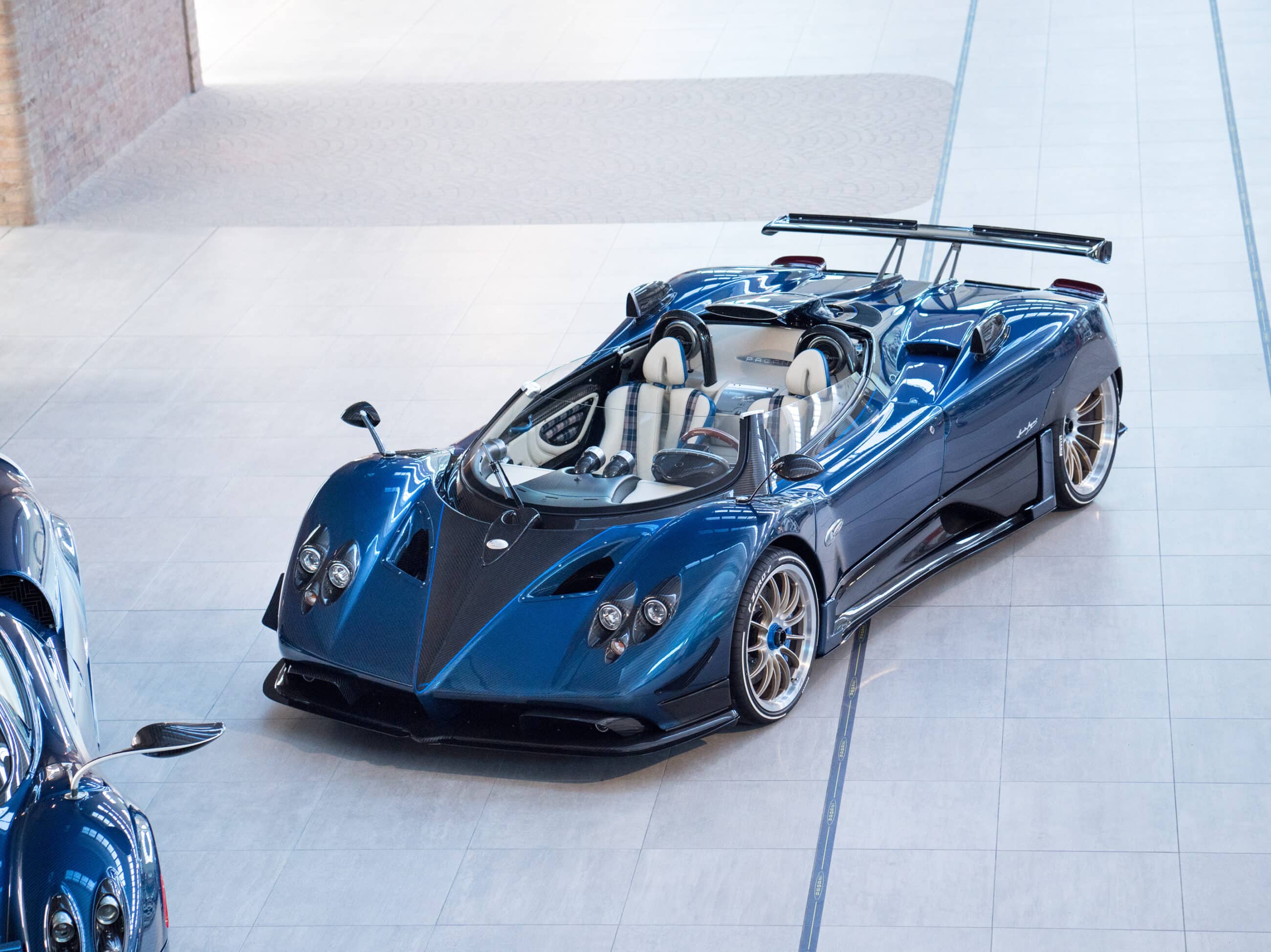
The specification reads as a rejection of everything the industry was doing in 2017. A 7.3 litre naturally aspirated V12 making close to 800 horsepower, a six-speed manual gearbox, rear wheel drive and a chopped windscreen. The rear wheels sit under fairings, a detail borrowed from 1950s sports racers that no modern manufacturer had attempted.
Three cars, from a company that had already announced the Zonda’s replacement twice, and the highest confirmed figure anywhere in this band.
The Coachbuild Tier and the Most Expensive Rolls-Royce Ever Built
The four most expensive cars ever built all sit above $28 million, all are Rolls-Royce, and not one carries a price the company has ever published. Nine years into the Coachbuild programme, Rolls-Royce has never confirmed a figure for any car it has built.
“We never talk about price. The price is the price.”
Torsten Müller-Ötvös, then chief executive, Rolls-Royce Motor Cars
That policy is why every number below carries a tier label. The magnitudes come from company spokespeople speaking on background, and the specific figures come from the trade press.
4. Rolls-Royce Boat Tail Price: More Than $28 Million, Officially Unofficial
A Rolls-Royce spokesperson confirmed the Boat Tail cost more than $28 million, and three were built from 2021. For a period it was the world’s most expensive car. That spokesperson magnitude remains the most precise figure the company has ever attached to a Coachbuild commission.
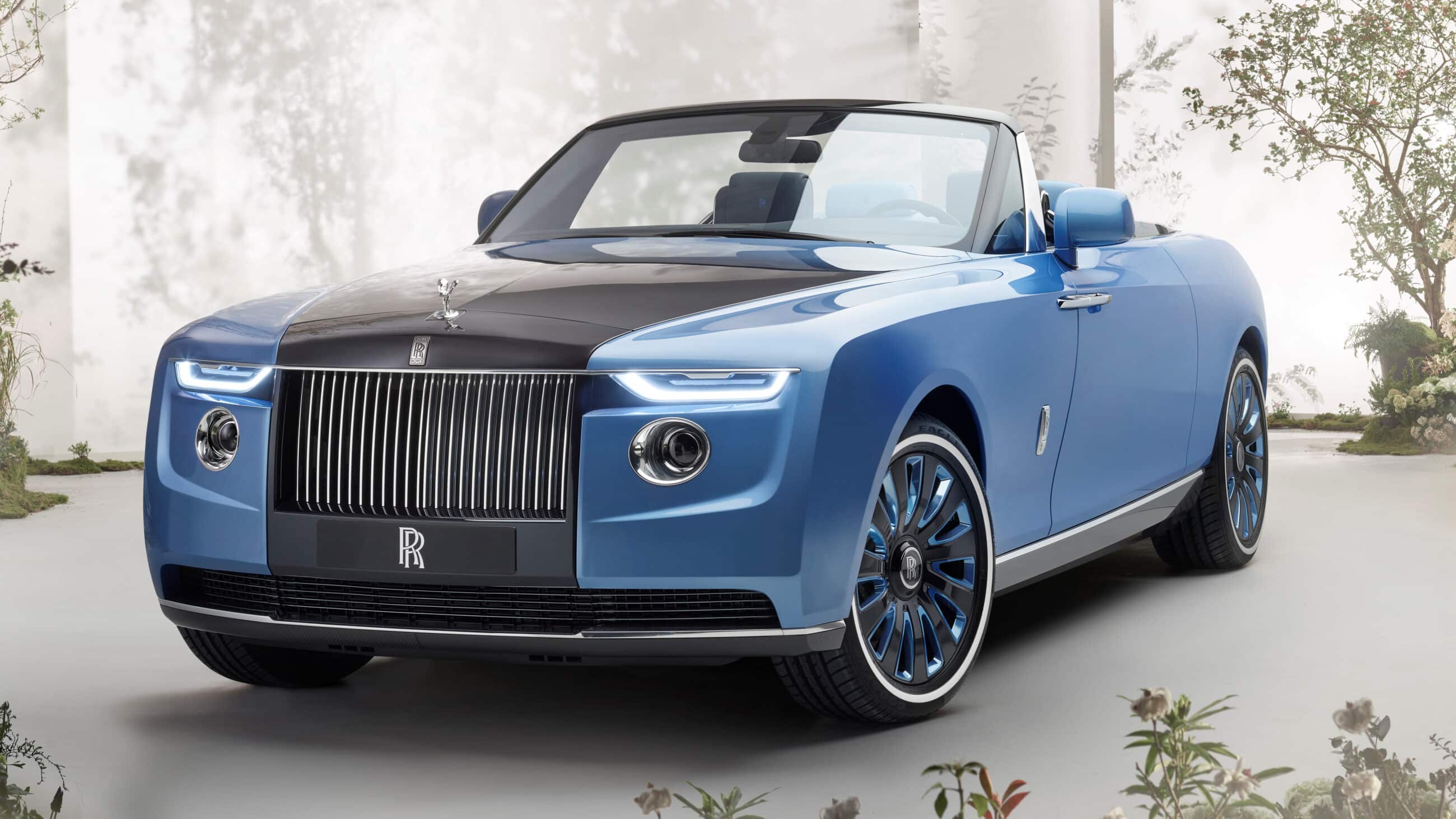
The rear deck hinges toward the centre line in a butterfly movement and presents its contents at a fixed fifteen degrees. Inside sits a double refrigerator built around the clients’ preferred vintages of Armand de Brignac, cutlery engraved with the car’s name and made by Christofle in Paris, rotating cocktail tables and interlocking stools formed from the same technical fibre as the bodywork. A parasol deploys inversely from beneath the rear centre line. Roughly 1,813 new parts were created for the project.
The dashboard clock took three years. Rolls-Royce and Bovet 1822 rebuilt the Amadeo convertible system from the ground up to produce two reversible tourbillon timepieces, one for each of the commissioning couple, each wearable on the wrist or seated in the fascia as the car’s clock. This is the second of the three removable timepieces in this ranking.
3. Rolls-Royce La Rose Noire Droptail: 1,603 Pieces of a Single Rose
La Rose Noire is estimated above $30 million, making it the third most expensive Rolls-Royce ever commissioned, and it was the first of four Droptails, revealed at Monterey in August 2023. One car. The commissioning family chose the Black Baccara rose as the theme, a cultivar reading near black in shade and deep red in direct light.
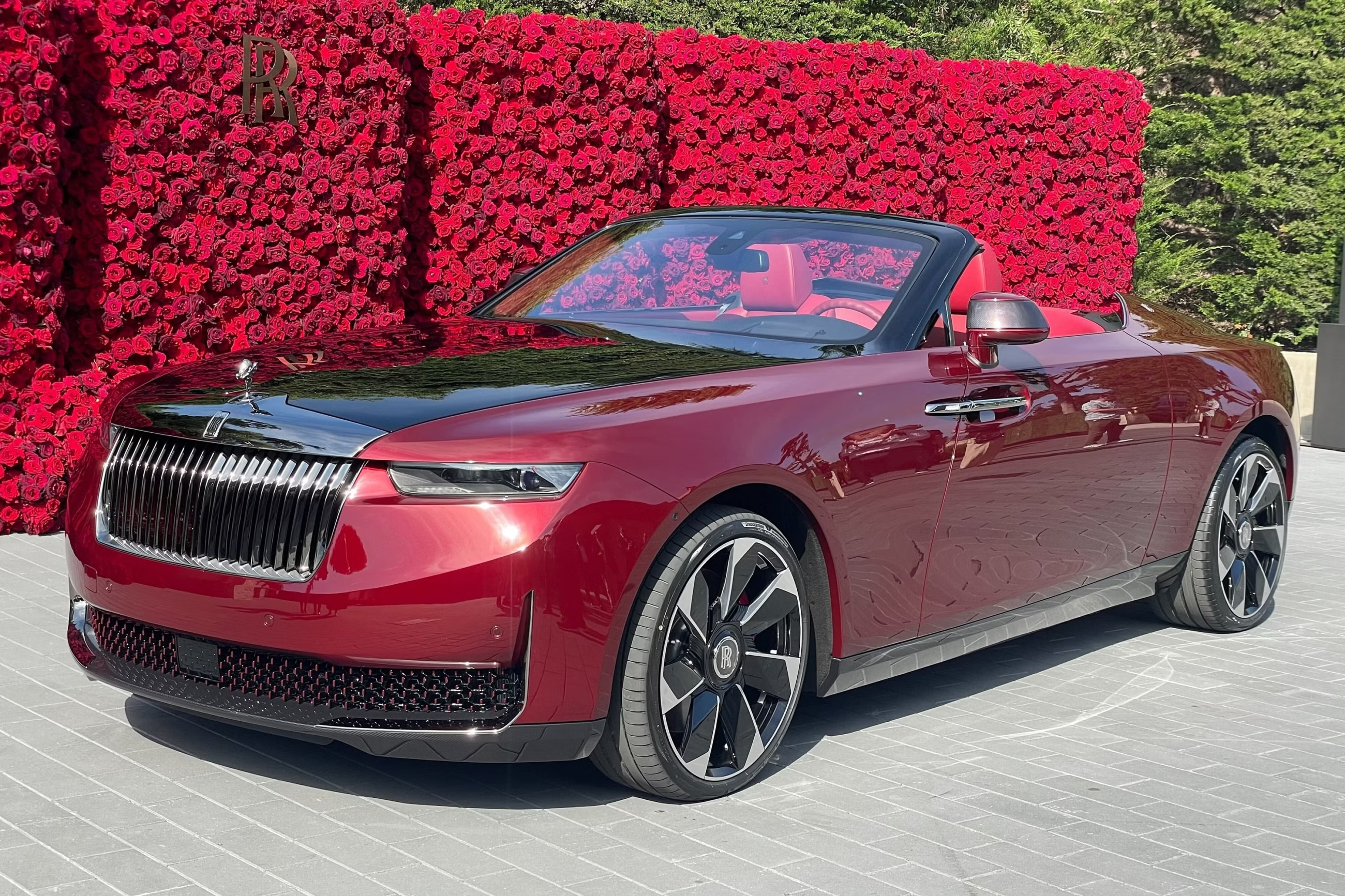
Matching that in paint took 150 iterations. The finish Rolls-Royce arrived at, called True Love, uses a base coat under five layers of clear lacquer, each blended with a slightly different tone of red, so the colour shifts as the light does.
The parquetry is the part that explains the price. It wraps the shawl panel, the doors and the fascia, and Rolls-Royce spent a further year developing the lacquer that protects it.
Rolls-Royce records the artwork as 1,603 individual pieces of Black Sycamore veneer sourced from France: 1,070 symmetrical triangles forming the background and 533 asymmetric red-painted pieces reading as falling petals. A single craftsperson assembled it in one-hour sessions, to a maximum of five hours a day, in a sound-insulated room, over more than nine months.
Rolls-Royce Coachbuild, La Rose Noire Droptail
The third removable timepiece in this ranking sits in the fascia here, a 43 millimetre Audemars Piguet made for this client and this car.
2. Rolls-Royce Arcadia Droptail: Eight Thousand Hours in the Wood Alone
The Arcadia is estimated near $31 million, the third Droptail, revealed in 2024 and delivered to a client in Singapore. First sketches were drawn in 2019, which puts the build cycle at roughly five years and makes this the slowest car on the list to reach its owner.
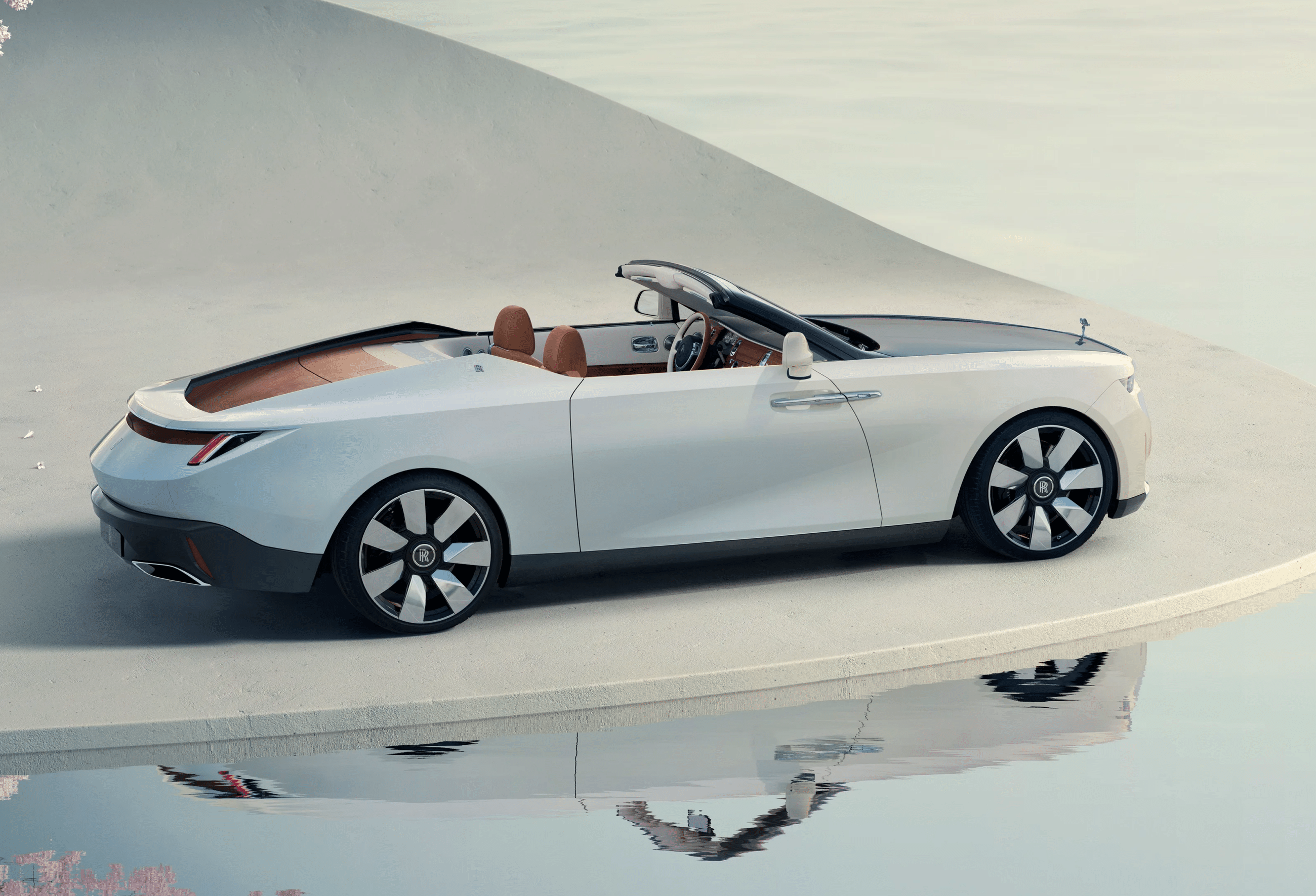
The wood is the story again. The rear deck and interior use Santos Straight Grain, cut into 233 individual pieces, seventy-six on the deck alone, each laid at 55 degrees so the grain runs continuously across a curved surface. Rolls-Royce spent approximately 8,000 hours on the wood alone and developed a bespoke lacquer tested for more than 1,000 hours in a purpose-built weather simulator before approval.
The dashboard clock took two years of research and five months to assemble, with hands and markers one tenth of a millimetre thick. The paint, Timeless White, carries aluminium and glass particles suspended in the finish.
Cars at this level do not reach a public listing, and the people who commission them do not shop in public either. How the off-market tier actually operates explains the structure. If there is something specific you are looking for, the conversation starts privately.
1. Rolls-Royce Amethyst Droptail: The World’s Most Expensive Car
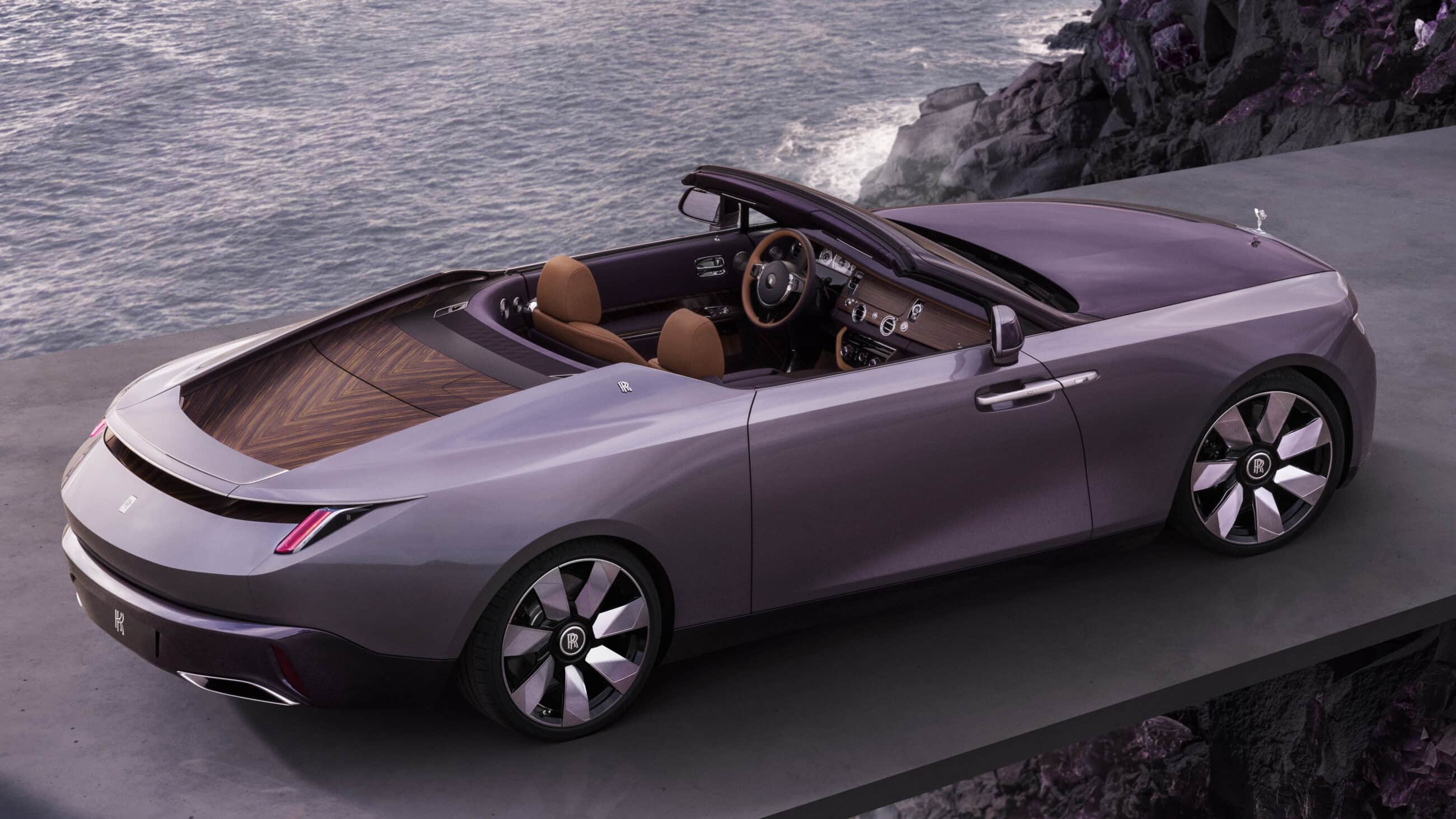
The Amethyst Droptail is the most expensive Rolls-Royce ever built, and the most expensive car ever built, at an estimated $37 million. That is the figure most widely cited across the trade, and some outlets have reported above $40 million. Rolls-Royce has confirmed neither. One car, the second of four Droptails, revealed in 2023.
Amethyst Droptail Vital Signs
The client’s family is in the gemstone business, which set the theme. Cabochon-cut amethysts are set into the car. The paint is a duotone called Globe Amaranth, a pink-purple carrying powdered aluminium flecks, run against a deep amethyst mica. The rear deck is Calamander Light, an open-pore wood chosen for how it reacts to the paint rather than for contrast against it.
The boot lid took two years to develop, because it is not a boot lid. It functions as an aerodynamic element generating downforce at speed, which meant solving a structural problem and a styling problem at once on a part that also has to open.
Underneath sits a monocoque combining steel, aluminium and carbon fibre, built for the Droptail programme rather than adapted from the Dawn. The V12 makes around 563 horsepower and the car is governed to roughly 155 miles per hour. This is the most expensive car ever built and it is nowhere near the fastest. Nothing about the performance explains the price. What explains it runs across the whole band: the 8,000 hours of wood on the Arcadia, the 1,603 marquetry pieces on La Rose Noire, the 150 attempts at a single shade of red, and here, a boot lid that took two years to become an aerodynamic element.
What a car of this order is worth at any given moment is a private question, answered privately.
Why Some of the Most Expensive Cars Ever Sold Are Not on This List
The absences are deliberate. Four cars carry figures larger than anything in the ranking above, and each one fails the price basis for a different reason. They appear here in descending order of the figure attached to them, which is not the same as descending order of price, because not one of these four numbers is a price. A fifth car fails the same test from underneath, and it makes the point more clearly than any of them.
The Four Largest Figures This Ranking Excludes
Mercedes-Benz 300 SLR Uhlenhaut Coupé: 135 Million Euros at Auction
One of two built, sold in Stuttgart in May 2022 for 135 million euros, comfortably the largest sum ever paid for a motor car in any currency. The number is real and it is verifiable. It is also an auction result, which measures what two bidders would go to on one night rather than what the car cost to build.
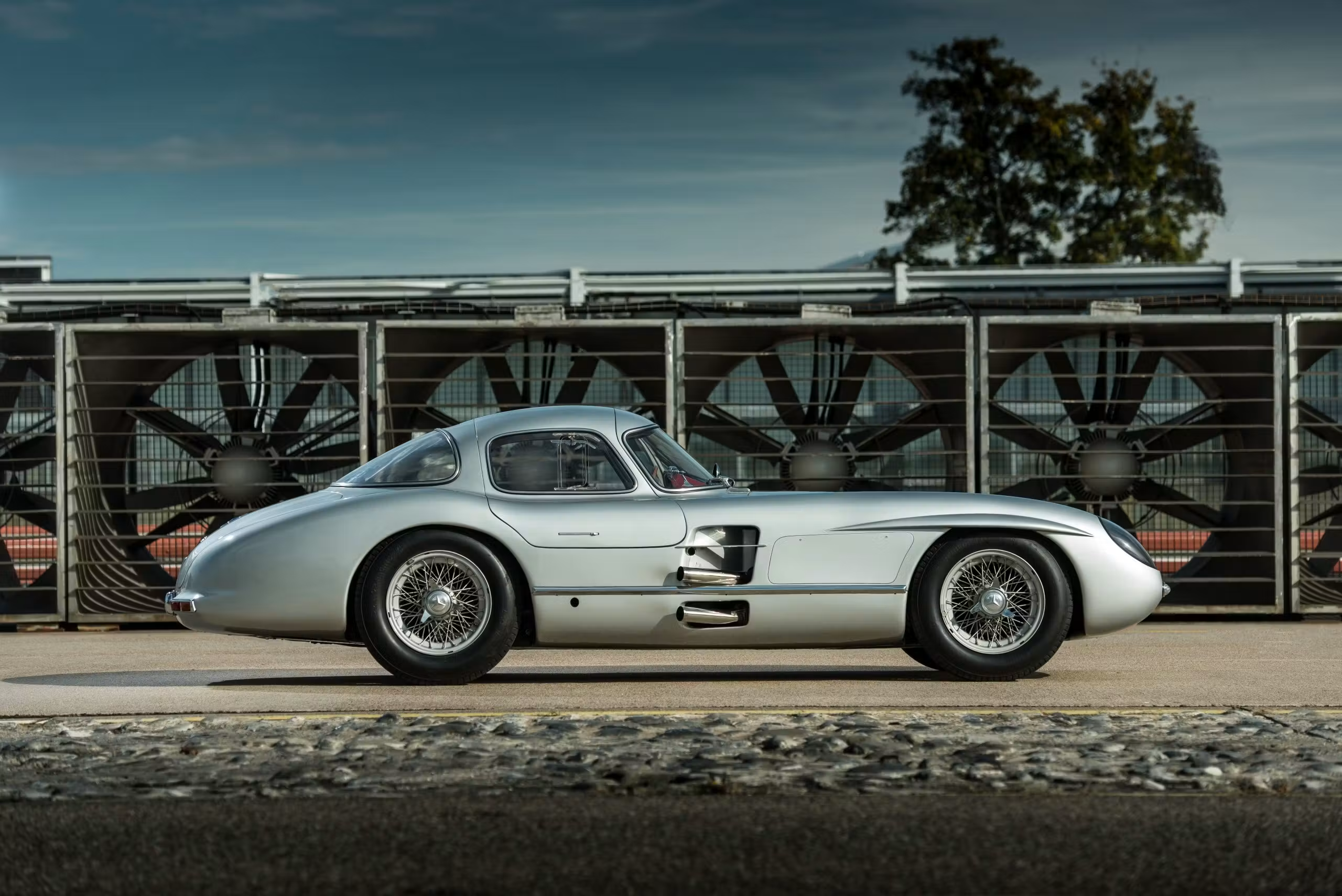
There is no build price to rank it by. Mercedes-Benz never offered the car to anyone. It was an engineering department’s road car, kept in the company’s own collection for 67 years before it was sold, and no figure was ever set for it because no sale was ever contemplated. A ranking built on build prices has nothing to work with.
Ferrari 250 GTO Chassis 4153 GT: $70 Million, Reported and Unconfirmed
This car reportedly changed hands privately in June 2018 for $70 million, the largest figure ever attached to a motor car outside an auction room. It won the 1964 Tour de France Automobile and finished fourth overall at Le Mans in 1963, so the provenance supports a number of that order.
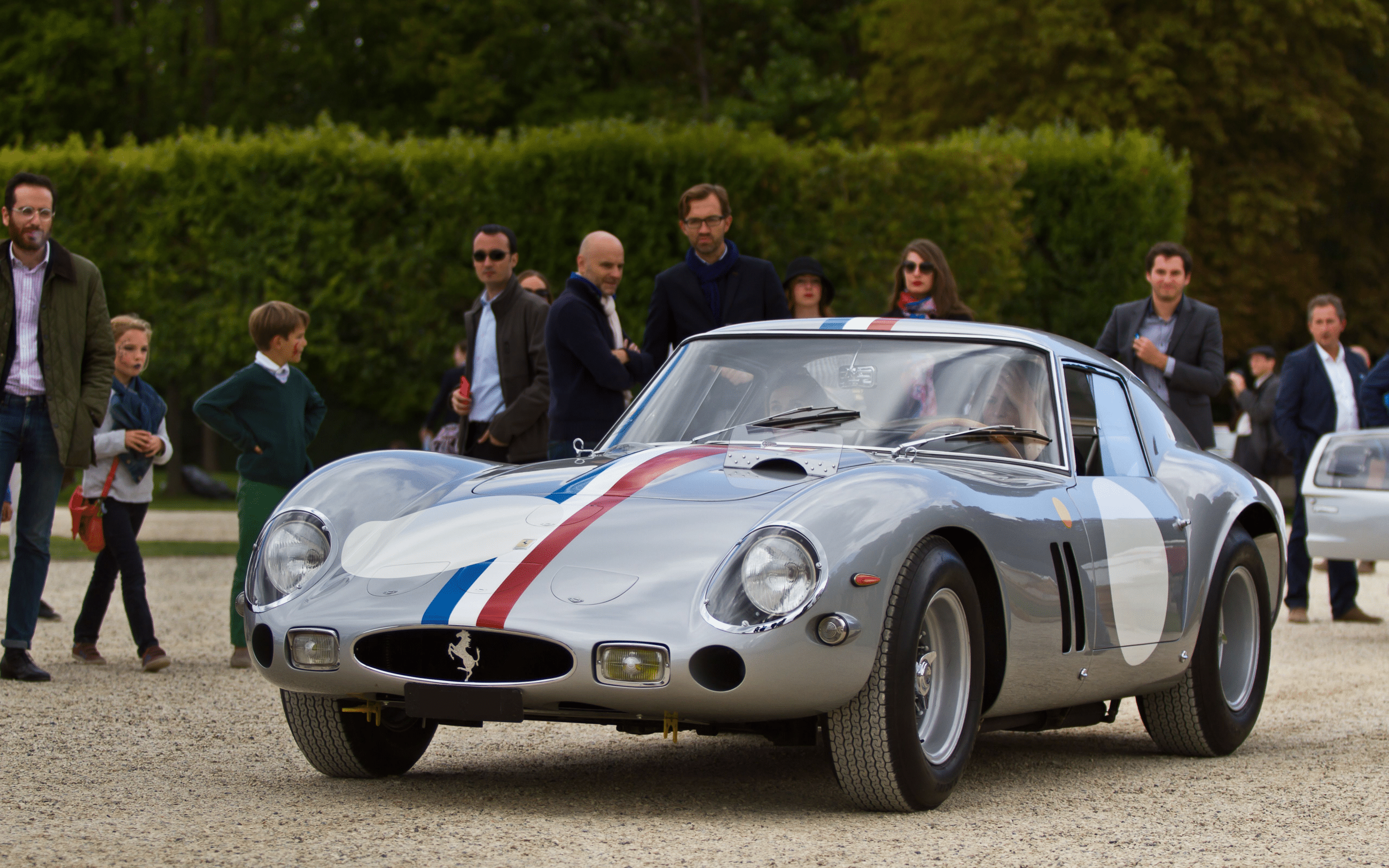
No seller, no buyer and no auction house has ever confirmed it. That places it in the same evidence class as the Brouillard, which is to say none at all, and the Brouillard is ranked without a figure for exactly that reason. Admitting $70 million here would put a 1963 Ferrari at the head of the list on evidence this ranking refuses everywhere else.
Ferrari 250 GTO Chassis 3413 GT: $48.4 Million With the Fees Included
At Monterey in August 2018 the hammer fell at $44 million and the buyer’s premium carried the total to $48,405,000, the most ever paid for a car at public auction. The previous record, $38,115,000 in 2014, also belonged to a 250 GTO. The figure quoted everywhere is therefore not even a number the seller received.
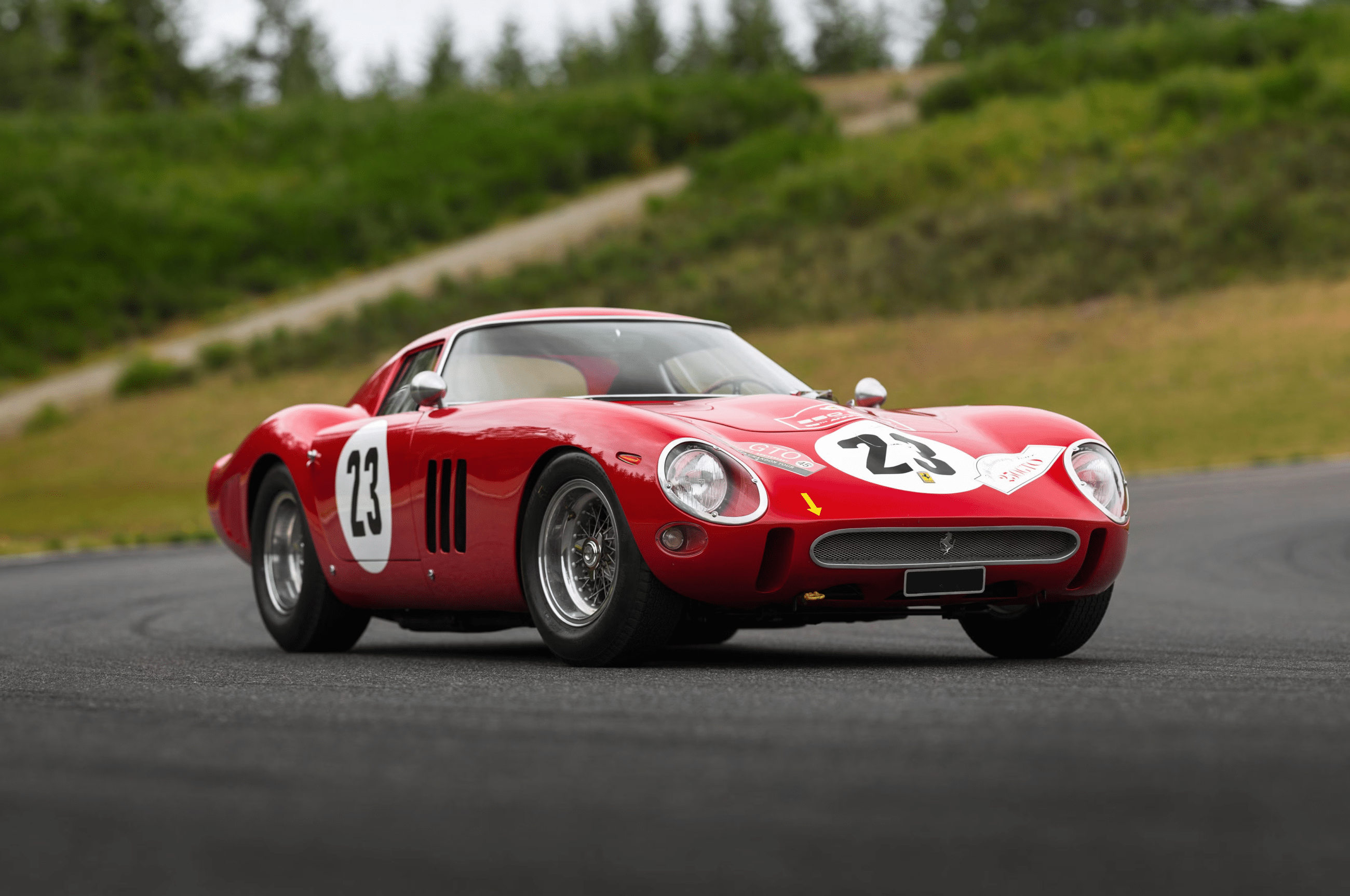
The 250 GTO is the one car here that does have a build price, and it is the argument for keeping the two separate. Roughly $18,000 new in the United States, with buyers personally approved by Enzo Ferrari. Ranked on the basis this list uses, the most valuable Ferrari in existence would not appear in the top twenty at all.
Ferrari LaFerrari Aperta: Why a Charity Result Is Not a Price
The Aperta is the case where the arithmetic does the arguing. The 210th car, built beyond the original run of 209, sold at Fiorano in September 2017 for 8.3 million euros, roughly $10 million, with the proceeds going to Save the Children. The pre-sale estimate was $3.5 million to $4.7 million.
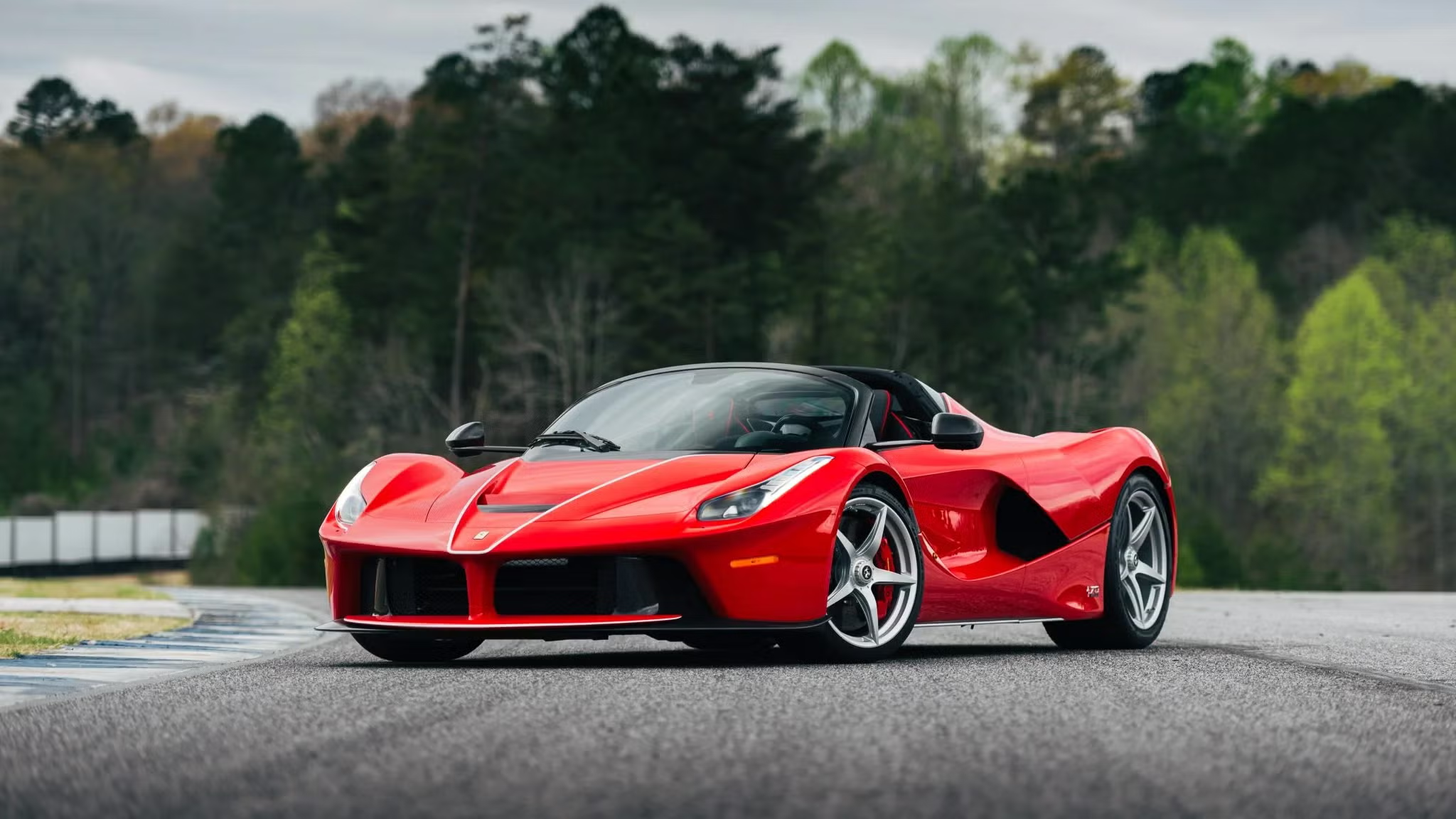
The result landed at more than double the top of that range, and the year before, the final LaFerrari coupe went for about $7 million on the same mechanism. The distance between estimate and hammer is philanthropy, and it is measurable. The car had not been built when it sold, so what actually changed hands was the allocation.
Lexus LFA: $375,000 to Buy, an Estimated $750,000 to Build
The LFA is the car raised most often against a ranking built on price. Toyota sold it for $375,000 in the United States and is widely reported to have spent around $750,000 building each one. Both numbers are famous. Only one of them was ever published by the company, and that is the argument in full.
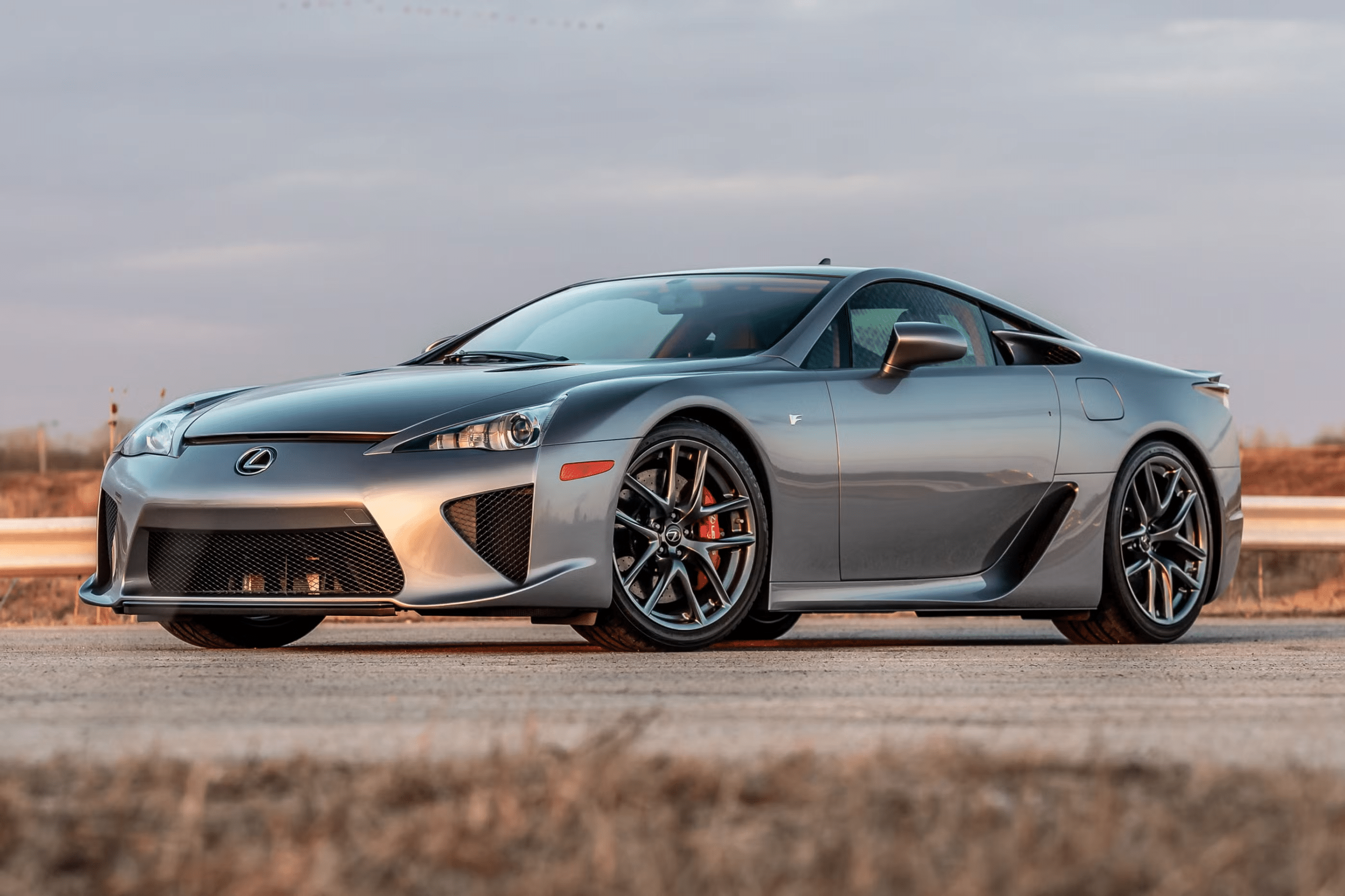
The price side is documented. Lexus set the US list at $375,000 when pre-sales opened in October 2009, with the Nürburgring Package adding $70,000 and matte black paint $20,000 beyond that, so the most expensive LFA a client could order listed at $465,000. Toyota’s own corporate history records 165 of the 500 cars going to Japan at 37.5 million yen. That is more first-party pricing evidence than any of the four cars at the top of this ranking carries.
Lexus LFA: Published Prices and Unpublished Costs
The cost side is undocumented. That $750,000 per car figure repeated across the automotive press traces back to no Toyota disclosure, and neither does the programme figure of roughly $800 million spent over a decade of development. Toyota built a bespoke circular carbon loom at Motomachi to weave the structure that accounts for about 65 percent of the body, and it has never said what the loom cost either. The Australian outlet WhichCar put the position plainly: the budget was never revealed.
The car does not make the cut even running that arithmetic. Eight hundred million dollars across 500 cars is $1.6 million each, comfortably under the $3.6 million it takes to reach position twenty. Applying the same method to a one-off, where the entire programme lands on a single chassis, ranking by development cost still places every one-off model above every series car. The order comes out of the production run rather than the engineering, which is why a cost column cannot sit beside a price column.
"Even the engineers wanted to stop it because of the cost."
Atsushi Takada, brand specialist, Toyota Motor Corporation
Toyota lost money on every LFA and has never disputed it. What the company has not done, at launch or in the years since, is attach a figure to the loss. Cost is what a manufacturer keeps. Price is what it announces. A ranking can be built from one of those and not the other.
One more category gets excluded without a car of its own. The Trevita and the Divo both trade above the build prices used here, in some cases several times over. Those figures are real and they describe demand rather than cost. Ranking one car by its resale while ranking the car beside it by its list price is the specific error this list exists to avoid.
Admit those four larger figures and the Amethyst Droptail is no longer the most expensive car ever built. It falls to fourth, behind a 1955 Mercedes that was never for sale, a 1963 Ferrari sold for a number nobody has confirmed, and a 1962 Ferrari whose total includes the buyer’s fees. The Aperta lands mid-table on a donation. That is the version most published rankings print.
The same discipline applies several tiers down. What your own car is worth rests on which of these categories its comparable figures come from, and most published comparables come from the wrong ones.
What the Top of the Market Signals
Twenty cars, and one pattern holds across all of them: price tracks labor and access, not performance. The most expensive car ever built is slower than a $400,000 Porsche. The Bolide cannot be registered. The Exelero existed to test tyres.
What buyers in this tier paid for was a process that cannot be repeated and a position in a queue that cannot be bought at any other price. That is what the most expensive car ever built actually costs money for. That has consequences several tiers down, because allocation history runs the whole length of the market. The Divo went to Chiron owners. The Codalunga went to existing Pagani clients. A car sitting in your garage is not only an asset. It is standing with a manufacturer, and that standing has a value no valuation report shows.
The practical read is that the market has split into two tiers, and the gap is widening rather than closing. What a ranked appreciation list reveals at the retail end follows the same logic in smaller numbers. The world’s most expensive car and a well-specified Phantom are priced by the same mechanism, several orders of magnitude apart.
The Full Ranking: Build Price, Evidence Tier and Production Count
| # | Car | Build price | Tier | Built | Year |
|---|---|---|---|---|---|
| 1 | Rolls-Royce Amethyst Droptail | ~$37M | Press estimate | 1 | 2023 |
| 2 | Rolls-Royce Arcadia Droptail | ~$31M | Press estimate | 1 | 2024 |
| 3 | Rolls-Royce La Rose Noire Droptail | ~$30M | Press estimate | 1 | 2023 |
| 4 | Rolls-Royce Boat Tail | >$28M | Spokesperson | 3 | 2021 |
| 5 | Pagani Zonda HP Barchetta | €15M | Manufacturer-stated | 3 | 2017 |
| 6 | Rolls-Royce Sweptail | ~£10M (~$12.9M) | Press estimate | 1 | 2017 |
| 7 | Bugatti La Voiture Noire | €11M pre-tax | Manufacturer-stated | 1 | 2019 |
| 8 | Bugatti F.K.P. Hommage | >€10M | Spokesperson | 1 | 2026 |
| 9 | Bugatti Brouillard | No figure published | Untraceable | 1 | 2025 |
| 10 | Bugatti Centodieci | €8M | Manufacturer-stated | 10 | 2019 |
| 11 | Maybach Exelero | ~$8M programme cost | Untraceable | 1 | 2004 |
| 12 | Pagani Huayra Codalunga | €7M | Manufacturer-stated | 5 | 2022 |
| 13 | Bugatti Divo | €5M | Manufacturer-stated | 40 | 2018 |
| 14 | Pagani Huayra Imola | ~$5.4M | Press estimate | 5 | 2020 |
| 15 | Lamborghini Veneno Roadster | $5.3M | Manufacturer-stated | 9 | 2014 |
| 16 | Koenigsegg CCXR Trevita | $4.8M | Press estimate | 2 | 2009 |
| 17 | Bugatti Bolide | €4M net | Manufacturer-stated | 40 | 2020 |
| 18 | Bugatti Tourbillon | €3.8M net | Manufacturer-stated | 250 planned | 2024 |
| 19 | Ferrari F80 | €3.6M | Manufacturer-stated | 799 | 2024 |
| 20 | Lamborghini Sián FKP 37 | $3.6M | Manufacturer-stated | 63 | 2019 |
Ten of twenty carry a manufacturer-stated price. Two rest on a spokesperson magnitude. Six are press estimates and two are untraceable. That ratio is worth carrying into any list of this kind you read elsewhere.
If the car you hold has become the thing standing between you and what comes next, the sequence matters more than the timing.
Frequently Asked Questions
What is the world’s most expensive car?
The Rolls-Royce Amethyst Droptail, at an estimated $37 million, is the world’s most expensive car by build price. Rolls-Royce has never confirmed the figure, and no Coachbuild price has been published by the company in the nine years the programme has run.
Why is the Mercedes 300 SLR not on this list?
Because it was sold at auction rather than built to commission. The 1955 Uhlenhaut Coupé brought 135 million euros at RM Sotheby’s in May 2022, making it the most expensive car ever sold. This ranking counts what cars cost to build, and those are different questions with different answers.
How much did the Bugatti La Voiture Noire cost?
Eleven million euros before tax and 16.7 million euros with tax, stated by Bugatti at Geneva in March 2019. In dollars at the time, $12.5 million and $18.9 million. Published figures that appear to disagree are almost always quoting one of those two numbers without saying which.
Are Rolls-Royce Coachbuild prices official?
No. Every Droptail and Boat Tail figure in circulation is either a press estimate or a magnitude a spokesperson confirmed on background. Rolls-Royce has never published a Coachbuild price.
Can you still buy any of these cars new?
No. All twenty were allocated or commissioned before delivery, and most sold out before their public reveal. The most expensive cars in the world are not sold so much as commissioned, and they change hands privately when they change hands at all.
Why is the Lexus LFA not on this list?
Its $375,000 US list price falls well short of the $3.6 million floor of this ranking, and the roughly $750,000 it is estimated to have cost Toyota to build each car is a press estimate of cost rather than a price. Toyota has never published a build or programme cost for the LFA.
Why is the LaFerrari Aperta not on this list?
It sold for 8.3 million euros, about $10 million, at Fiorano in September 2017 against a pre-sale estimate of $3.5 million to $4.7 million, with the proceeds going to Save the Children. A charity result carries a donation premium as well as a price. This ranking counts what cars cost to build or commission.
Exotics Wanted acquires high-end exotic and luxury vehicles directly from private owners, backed by real-time market intelligence and certified funds. Learn more about our process
Exotics Wanted, LLC is a vehicle acquisition company, not a law firm, CPA practice, financial advisory firm, or insurance brokerage. Nothing in this article constitutes legal, tax, financial, investment, or insurance advice. All market data, production numbers, auction results, and industry metrics are derived from publicly available sources believed to be accurate as of publication and are subject to change; forward-looking statements are projections based on current data and actual conditions may differ materially. This content does not constitute a recommendation to buy, sell, or hold any vehicle or asset; readers should consult a qualified professional in their jurisdiction before making transactional decisions. Analytical frameworks and scoring methodologies referenced in this article are proprietary to Exotics Wanted.
